Trump supporters in Texas turn critics as immigration policies trigger sharp backlash and wider economic and political fallout
 Wyatt Johnson
Follow on X
Send an email
April 16, 2026
Wyatt Johnson
Follow on X
Send an email
April 16, 2026
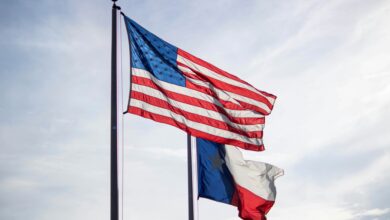
Texas – A deep shift is unfolding in South Texas, where some of President Donald Trump’s former supporters are now openly turning against him, pointing to immigration policies they say have gone far beyond enforcement and into everyday life—bringing economic strain, fear, and political fallout with them.
At the center of this shift is Mario Guerrero, a 33-year-old home builder and executive director of the South Texas Builders Association, who once backed Trump but now speaks with frustration and disbelief. His turning point came as immigration raids intensified across the Rio Grande Valley, disrupting not just communities but entire industries.
Guerrero described a ripple effect that spread quickly through construction and related businesses. “I called a meeting with the [South Texas Builders Association] membership. It turns out that it was happening across the board—lumber companies, title companies, granite companies. Builders couldn’t finish their jobs,” he said. The impact, he explained, was severe and immediate. “I had a lumber company losing like 54 percent [in sales] in the first quarter of this year because of ICE raids, bro. And then you had companies like Materiales El Valle that’s been around for forty years operating at a 60-something percent loss.”
What stood out most, according to Guerrero, was that the disruption did not stop at undocumented workers. He said even individuals with legal status were caught up in enforcement actions, sometimes detained and later released without clear justification. That uncertainty, he argued, has created a lasting sense of fear.
“People felt fear, helplessness,” Guerrero said. “I really believe that in this life, when you put fear into somebody’s stomach, it’s really hard to win that trust back. And that’s what the Trump administration did. They put fear into people’s stomachs. So no matter what they do, it’s going to be really hard for them to win us back.”
Policies Expand Beyond the Border
What Guerrero experienced locally reflects a much broader shift happening across Texas. Immigration enforcement is no longer limited to border crossings. Instead, a series of new rules and policies has extended into daily life, affecting how people work, travel, study, and access basic services.
Over the past year, state agencies and lawmakers have tightened rules across multiple areas. Professional licenses now require proof of immigration status, limiting access for workers in fields ranging from construction to health care. Transportation rules have also changed, with stricter enforcement affecting truck drivers and new limits placed on driver’s licenses for certain groups, including DACA recipients and asylum seekers.
Even routine activities have been affected. New identification requirements for vehicle registration and changes to in-state tuition eligibility have added new barriers, while hospitals are now required to collect information about patients’ legal status.
Advocates argue these policies are not isolated decisions but part of a broader strategy. “These all represent a broader and more coordinated shift … to create a pipeline of exclusion that stretches from limiting access to K-12 education, all the way into participation in the workforce and basic mobility through the state,” said Corinne Kentor.
Critics have also raised concerns about how these changes are being implemented, pointing out that many are introduced through state agencies rather than through public legislative debate. Gloria Leal questioned the process directly, saying, “There’s a legislative process to make sure that whatever comes out meets the will of the people, and the representatives who represent us. This just eliminates that, and you have to wonder, why? What’s the urgency?”
Political Fallout Begins to Surface
The impact is not only economic or social—it is increasingly political. In South Texas, where Trump made significant gains among Hispanic voters in 2024, signs of reversal are beginning to appear.
Guerrero himself made headlines earlier when he declared, “South Texas will never be red again.” That statement now reflects a wider mood shift among some Latino voters who once supported Trump but are now reconsidering.
The debate over birthright citizenship has intensified that shift. Trump’s executive order seeking to end automatic citizenship for certain children has struck a personal chord with many families in the region.
For some, the issue goes beyond policy and into identity. Birthright citizenship is seen as a defining principle of belonging in the United States. That is why reactions have been strong. “It is saddening,” said Samuel Garza, who warned the change “would hurt so many families who come here to contribute and make lives here.” He added, “I don’t think I can vote Republican anymore.”
Others remain within the party but express clear disagreement. “If you are born in the United States, you are a citizen — it’s pretty clear in the 14th Amendment,” said Santiago Manrrique. Polls reflect this growing divide. While Trump once improved Republican performance among Hispanic voters, recent data shows declining support, with rising disapproval tied largely to immigration policies.
A Turning Point With Uncertain Consequences
As the legal battle over birthright citizenship moves through the courts, and as new policies continue to reshape daily life, Texas is becoming a focal point in a larger national debate.
Supporters of the policies argue they are necessary to enforce the law and protect public resources. “Benefits, licenses, and taxpayer-funded services should not be used to incentivize unlawful presence at the expense of hardworking Texans,” said Andrew Mahaleris. But for critics—and for former supporters like Guerrero—the damage may already be done. The combination of economic disruption, personal fear, and policy changes has created a sense that something deeper has shifted.
What was once a reliable base of support is now showing signs of fracture. And as voices from within that base grow louder, the political consequences may extend far beyond South Texas. The situation is still unfolding, but one thing is becoming harder to ignore: this is no longer just a policy debate. It is a turning point—one that could reshape both the economy and the political map in ways that are only beginning to emerge.
Wyatt Johnson
Follow on X
Send an email
April 16, 2026