Battle for Texas intensifies as billionaire donors pour millions into super PACs targeting GOP strongholds ahead of high-stakes midterms

Texas – James Talarico has quickly become a central figure in what many are now calling a growing “battle for Texas,” as his campaign’s strong fundraising numbers signal new energy for Democrats in a state long dominated by Republicans. Raising tens of millions in a short period, Talarico’s momentum reflects not just personal popularity but also broader national interest in flipping key seats.
His ability to attract large-scale donations has allowed him to focus early on messaging while Republicans remain tied up in internal conflicts between major candidates. That contrast has created a rare opening, with some strategists believing Texas could be more competitive than expected. Still, history shows that fundraising alone does not guarantee victory, especially in a state with deeply rooted voting patterns. Even so, Talarico’s surge has intensified the stakes, turning the race into a closely watched contest that could reshape expectations about political power in Texas.
Billionaire money floods into high-stakes races
New federal filings have now added another layer to this already tense political moment. The latest reports show that some of the country’s wealthiest donors are pouring massive sums into super PACs on both sides, turning the upcoming midterms into a financial arms race with national consequences.
Among Republicans, billionaire donor Miriam Adelson has emerged as a dominant force. According to the filings, she contributed $30 million to the Senate Leadership Fund, a key group supporting Republican Senate candidates. She also added another $10 million to the Congressional Leadership Fund, which backs GOP House campaigns. Altogether, her contributions have reached $40 million in just the first part of the year, underscoring the scale of resources being mobilized to defend Republican strongholds like Texas.
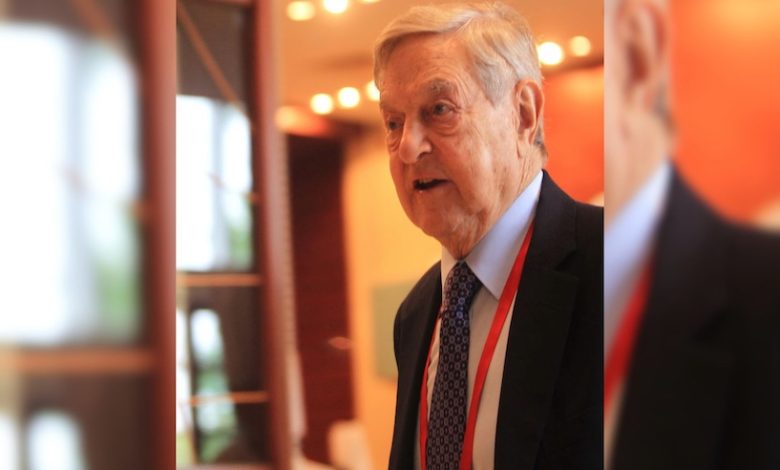
On the Democratic side, billionaire George Soros made an even larger single move, donating $50 million to Democracy PAC through an affiliated group. That funding has already begun flowing into other political efforts, including a $9 million transfer to the Senate Majority PAC, which works to elect Democratic candidates across the country. This level of spending highlights how seriously Democrats are taking opportunities in states that were once considered safely Republican.
The contrast in wealth between the two major donors also stands out. Adelson’s fortune is estimated at $37.3 billion, while Soros’ net worth is around $7.5 billion. Yet both are playing outsized roles in shaping the political battlefield, showing how a small number of individuals can influence national elections.
Talarico’s rise meets national momentum
At the center of this growing storm is Talarico, whose campaign has raised an eye-catching $27 million in just the first three months of the year. That figure alone would be notable in any race, but in Texas — a state where Democrats have struggled statewide for decades — it has sparked renewed optimism.
His fundraising success appears to mirror broader enthusiasm among Democratic voters and donors, many of whom see a potential opening as Republicans navigate internal divisions. With key GOP figures engaged in their own battles, Talarico has been able to move forward without facing a contested primary, giving him valuable time to build a statewide message.
Still, there are reasons for caution. Texas has a long history of favoring Republican candidates, and even record-breaking fundraising totals have not always translated into victory. Past campaigns have shown that money, while essential, is only one part of a much larger equation that includes voter turnout, messaging, and political climate.
A wider surge in political spending
The filings also revealed that the surge in political money is not limited to traditional party structures. A pro-artificial intelligence super PAC called Leading the Future received $25 million from venture capital firm Andreessen Horowitz, with $12.5 million each coming from co-founders Benjamin Horowitz and Marc Andreessen. This suggests that new policy areas, like emerging technology, are beginning to attract major financial backing as well.
Meanwhile, another group, Win for America, raised more than $40 million in the same period. Much of that funding came from major players in the sports betting industry, including $19.5 million from FanDuel and $17.5 million from DraftKings’ parent company. These contributions show how a wide range of industries are becoming deeply involved in shaping political outcomes.
A race that could redefine expectations
Taken together, these developments point to a rapidly changing political environment. Massive fundraising, billionaire influence, and shifting voter energy are all converging at once, turning Texas into one of the most closely watched battlegrounds in the country.
For Republicans, the influx of money is aimed at protecting a long-held advantage. For Democrats, it represents a chance — however uncertain — to break through in a state that has long resisted change.
As the midterms approach, the question is no longer just about who raises the most money. It is about whether this surge in resources, combined with political divisions and shifting attitudes, will be enough to reshape the balance of power in Texas.