Controversy ignites nationwide as Texas GOP lawmaker pushes bill that could strip citizenship over political views deemed “hostile” to American values

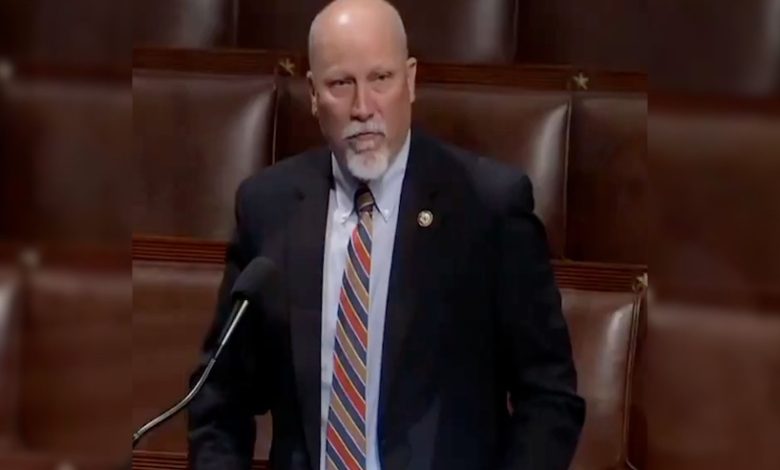
Texas – Controversy is rapidly spreading across the country after Chip Roy introduced a sweeping and highly debated immigration proposal that critics say could reshape how citizenship itself is defined in the United States. The Texas Republican’s bill, formally titled the Measures Against Marxism’s Dangerous Adherents and Noxious Islamists (MAMDANI) Act, is already drawing strong reactions for its attempt to link immigration status directly to political and ideological beliefs.
At the heart of the proposal is a dramatic expansion of existing immigration law. The bill seeks to amend the Immigration and Nationality Act to allow for denial of entry, denial of citizenship, deportation, and even denaturalization based on a person’s membership in, affiliation with, or advocacy for certain ideologies. These include socialism, communism, Marxism, and what the legislation describes as Islamic fundamentalism.
A sweeping proposal targeting ideology
Under the proposed law, individuals could face removal from the United States not only for formal membership in certain political or religious groups, but also for expressing support for those ideas. The bill outlines that an individual could be deported if they have engaged in advocacy, distributed materials, or even possessed content tied to these ideologies.
It goes further by stating that such determinations would be final and “not be subject to review by any court,” raising serious questions among observers about due process and legal oversight.
The legislation also specifically references Zohran Mamdani, after whom the bill is named. Roy’s office pointed to “the very presence of Zohran Mamdani and those like him who champion Marxist ideologies” as evidence that the current immigration system “enables the mass importation of Marxists and Islamists.”
In a press release, Roy framed the issue in stark terms, asking: “Why do we continue to import people who hate us?” He added, “Not just for the last six years, but for the last 60 years, our immigration system has been cynically used to disadvantage American workers’ competitiveness in favor of mass-importing the third world. This has not just led to higher crime and lower wages, but also the promulgation of hostile ideologies fundamentally opposed to American values.”
He further argued that the bill “deploys new tools to fight back against the Marxist and Islamist advance that has devastated Europe and has now arrived on our doorstep, especially in my home state of Texas.”
Broader political context and past actions
Roy’s proposal does not exist in isolation. It follows a series of actions and statements he has made in recent years focusing on immigration and religion. In 2025, he introduced the Preserving a Sharia-Free America Act, which aimed to block individuals who observe Sharia law from entering or remaining in the country.
Speaking previously on the issue, Roy said, “America is facing a threat that directly attacks our Constitution and our Western values: the spread of Sharia law.” He continued, “From Texas to every state in this constitutional republic, instances of Sharia adherents masquerading as ‘refugees’ – and in many cases, sleeper cells connected to terrorist organizations – are threatening the American way of life.”
His focus on these themes has also become a key part of his broader political ambitions, as he runs for attorney general in Texas. Roy has longstanding ties within Republican politics, having worked with figures such as John Cornyn, Ted Cruz, and Rick Perry, as well as serving under Ken Paxton.
At the state level, similar rhetoric has gained traction. Greg Abbott previously designated the Council on American Islamic Relations as a foreign terrorist organization, a move that has since been challenged in court.
Uncertain future but immediate impact
Despite the attention it has generated, the bill is not expected to pass in either the House or Senate. Still, its introduction has sparked a broader national debate about the limits of immigration policy and the role of political beliefs in determining who can live in the United States.
Supporters argue that the measure is necessary to protect national values and prevent the spread of ideologies they view as dangerous. Critics, however, warn that tying citizenship or residency to political views could set a troubling precedent, potentially clashing with long-standing principles around free speech and individual rights.
The proposal also arrives at a time when immigration remains one of the most divisive issues in American politics. By targeting not just actions but beliefs, Roy’s bill pushes that debate into new and uncertain territory.
As the 2026 elections approach and Roy continues his campaign for higher office, the controversy surrounding the MAMDANI Act is likely to remain in the spotlight. Whether or not the legislation advances, it has already succeeded in igniting a nationwide conversation—one that touches on identity, law, and the fundamental question of what it means to be an American.