Texas leaders slam Trump over controversial message labeling immigrants from India and China as “hellholes,” as critics warn rhetoric could shape public opinion

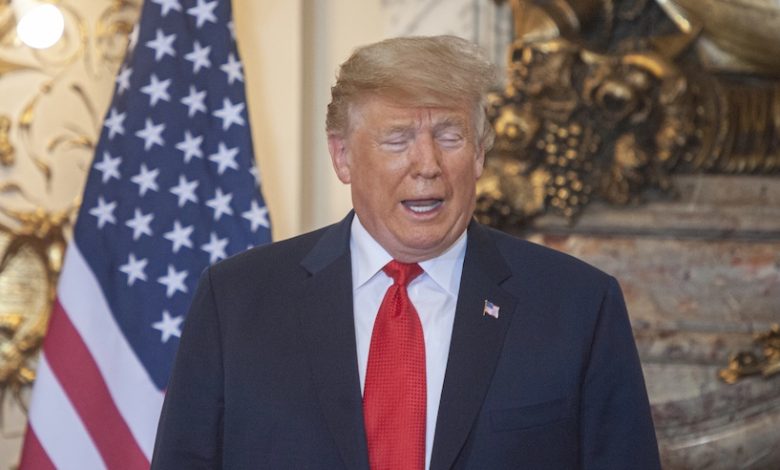
Texas – A political firestorm is unfolding in Texas after Donald Trump amplified a message online that critics say crosses a dangerous line from policy debate into outright dehumanization. By reposting a statement filled with harsh language about immigrants, Trump has triggered backlash not only from advocacy groups but also from elected officials who argue the consequences could ripple far beyond social media.
At the center of the controversy is a post originally written by Michael Savage, which Trump shared on Truth Social without adding any comment. The message included sweeping claims about immigrants and explicitly referred to countries like India and China as “hellholes,” while accusing immigrants of harming the United States in extreme terms.
“A baby here becomes an instant citizen, and they bring the entire family in from China or India or some other hellhole on the planet,” Savage said. “They’re not like the European Americans of today and their ancestors…they all integrated and became Americans in the melting pot.”
The message escalated further, claiming: “They’ve done more damage to this nation than all the mafia families put together, in my un-humble opinion,” he wrote. “Gangsters with laptops. They’ve robbed us blind, treated us like second-class citizens, let the turd world triumph, stepped on our flag, et cetera.”
Backlash grows across Texas
The repost quickly ignited sharp reactions across Texas, where political and community leaders say such rhetoric feeds division at a time when immigration debates are already tense. Civil rights advocates argue that when a figure as prominent as Trump shares these kinds of statements, it gives them a wider reach—and, potentially, more influence.
Asian Texans for Justice was among the first to respond. Executive Director Nabila Mansoor warned that the impact goes far beyond the original message itself.
“Donald Trump knows exactly what he is doing when he reposts this kind of content,” Executive Director Nabila Mansoor told Chron in an emailed statement. “He takes hate that might have stayed online and turns it into permission for public officials to say it louder, push it further, and build policy around it.”
She added that the timing is especially concerning in Texas, where political rhetoric around immigration and religion has already intensified.
“That is exactly why this matters in Texas, where leaders are already teeing up the next legislative session with attacks on Muslim communities and false claims about Sharia law,” Mansoor added. “At Asian Texans for Justice, we are fighting for a Texas where all people feel bold in their belonging. Our communities shouldn’t have to live under the threat of being turned into a political target just because someone decided fear was useful.”
Elected officials respond with personal and political outrage
The reaction was not limited to advocacy groups. Lawmakers also voiced frustration, with some emphasizing the personal impact of the language used.
Salman Bhojani, who represents Euless, made it clear that the issue goes beyond politics.
“Referring to India, China, or any nation as a ‘hellhole’ is xenophobic, plain and simple,” he told Chron in an emailed statement. “My wife is an Indian American. This rhetoric is not abstract to me, it is personal.”
Meanwhile, Gene Wu delivered an even sharper response, tying the controversy to broader national concerns.
“Donald Trump is clearly not well, and he’s taking it out on American families,” he told Chron in a statement. “As gas prices skyrocket due to his war with Iran and new US Census data shows Texas is more expensive to live in than ever before, the President is far more focused on telling millions of American families like mine that their birthplaces are ‘hell-holes’ and that they are ‘gangsters with laptops.'”
Wu also called on political leaders to take a stand.
“Every Texas Republican who has ever shaken hands with an Asian American voter, taken a donation from an Asian American business owner, or asked for our votes owes our community an immediate public condemnation,” Wu continued. “And while they stay silent, Texas House Democrats are fighting for every family in this state, no matter where you were born or what your last name is.”
A broader shift in tone and rising fatigue
For candidates and community members, the controversy reflects something deeper than a single post. Pooja Sethi, who has faced attacks tied to her Indian background, described a growing sense of exhaustion.
“This is exhausting,” Sethi told Chron. “We’re just like, as a community, just tired of being the punching bag for politicians in general. It was like, here we go again.”
She suggested that the tone of public discourse has shifted in recent years, becoming more intense and more personal.
“It feels worse these days,” she said. “Part of it is because we are in an economy right now where people are feeling strained and stressed out and we have a scarcity mindset going on right now where it is, it can’t be us, it’s them.”
Sethi also pushed back against the idea that the communities being targeted are outsiders.
“People who are born and raised here: people in this country who are as American as people can imagine,” she said. “I genuinely am so scared and worried about the world that we’re raising our children in.”
Her frustration extended to the broader climate of online attacks and political messaging.
“It is exhausting that there’s people in this country who wake up, do the work, fight for better healthcare, fight for a better economy, fight for better schools… and there’s another part of this country that does nothing but wake up and put hateful things on social media attacking the very communities that are trying to do the work,” she said.
“It needs to stop,” Sethi concluded. “We’re all tired of it and it’s not going to actually make our country better.”
Bigger implications beyond one post
The controversy arrives at a moment when immigration debates in Texas are already under intense scrutiny. Statements from figures like Brandon Gill about concerns over cultural change have added to an environment where rhetoric is closely watched—and quickly amplified.
For critics, Trump’s repost is not just about one message, but about the direction of public conversation. They argue that when language like this becomes more visible, it risks shaping how communities are viewed and treated.
Supporters of stricter immigration policies often argue for tougher rules and enforcement. But opponents say there is a clear difference between policy debate and language that paints entire groups in negative terms.
As reactions continue to unfold, the episode highlights a growing divide—not just over immigration policy, but over how that debate is carried out. In a state as diverse as Texas, the words used by national figures can carry lasting weight, influencing not only politics but the everyday lives of millions of residents.