Attorney General Paxton targets major Texas school districts in massive investigation over Ten Commandments law and school prayer requirements

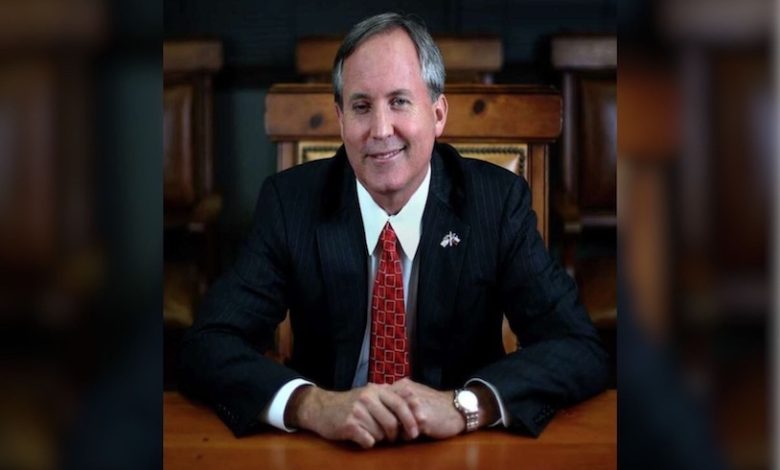
Texas – Texas Attorney General Ken Paxton has launched a sweeping statewide investigation into dozens of Independent School Districts as part of an aggressive push to enforce new laws requiring the display of the Ten Commandments in classrooms and formal consideration of prayer time in public schools.
The move immediately intensified an already heated debate across Texas over religion in education, constitutional rights, and how far the state should go in reshaping public school policies around faith-based practices.
Paxton announced that his office is now investigating school districts across the state to determine whether they are complying with Senate Bill 10 and Senate Bill 11, two controversial laws that took effect after being passed during the Texas Legislature’s 89th session.
“I will always fight for students’ fundamental right to pray in our schools and work to ensure that Texas kids are able to learn from the Ten Commandments daily,” Paxton said. “Texas schools districts must comply with Texas law by displaying the Ten Commandments and taking a school board vote regarding the implementation of prayer time in schools. I will never stop defending our students’ religious freedom and the moral foundation of our nation.”
Schools ordered to provide records and proof of compliance
Under Senate Bill 10, Texas public schools are required to display donated copies of the Ten Commandments in classrooms if the materials meet certain legal specifications outlined in the law.
Senate Bill 11 goes even further by requiring school boards to formally vote on whether campuses should create designated periods for prayer and reading religious texts such as the Bible.
As part of the new investigation, Paxton’s office has demanded documentation from school districts showing whether trustees voted on implementing prayer time under SB 11. Districts are also being ordered to provide records connected to the display — or failure to display — the Ten Commandments in classrooms under SB 10.
The investigation affects many of the largest and most recognizable school districts in Texas.
Among the districts named are Austin ISD, Houston ISD, Dallas ISD, Fort Worth ISD, Plano ISD, Cypress-Fairbanks ISD, Northside ISD, Fort Bend ISD, Conroe ISD, El Paso ISD, Corpus Christi ISD, Amarillo ISD, Brownsville ISD, Beaumont ISD, and several others spread across the state.
Some of the targeted districts were already involved in earlier legal battles over the Ten Commandments law before it officially took effect statewide.
Legal fight over the Ten Commandments law
The investigation follows a major court victory for Paxton earlier this year.
The U.S. Court of Appeals for the Fifth Circuit upheld the constitutionality of SB 10, allowing the law requiring Ten Commandments displays to move forward across Texas public schools.
That ruling became a major turning point in the broader legal fight surrounding religion in classrooms. Critics had argued the law blurred the line between church and state, while supporters insisted it reflected the nation’s historical and moral foundations.
Paxton has repeatedly framed the issue as part of a larger effort to restore religious expression in schools.
Since the passage of SB 11, the attorney general has openly encouraged districts to bring organized prayer opportunities back into public education settings.
Supporters of the laws argue students should not be discouraged from expressing religious beliefs at school and say the Ten Commandments hold historical significance beyond religion itself.
Critics, however, warn that requiring religious displays in public school classrooms could alienate students from different faith backgrounds or students who are not religious at all.
The issue has become one of the most politically charged education debates in Texas, especially as conservative lawmakers continue pushing for broader faith-centered policies in schools.
Political and cultural battle likely to intensify
Paxton’s statewide investigation signals that Texas officials are preparing to aggressively enforce the new laws rather than simply leaving implementation up to local school boards.
For many districts, the demands from the attorney general’s office now create pressure not only to comply legally, but also to navigate growing political divisions inside their own communities.
Some parents and religious groups have praised the investigation, saying schools should reflect traditional values and allow students to engage openly with religion.
Others fear the state is moving public education into increasingly divisive territory where government officials play a larger role in promoting religious practices inside classrooms.
The investigation is also likely to reignite broader national debates over religious freedom, constitutional protections, and the separation of church and state — debates that have become increasingly intense across conservative-led states in recent years.
For now, Texas school districts are being forced to respond directly to Paxton’s demands while preparing for what could become another major legal and political battle over the future of religion in public schools.