Millions of Texans may lose Medicaid and Medicare benefits as President Trump threatens to cut national funding despite previous promises

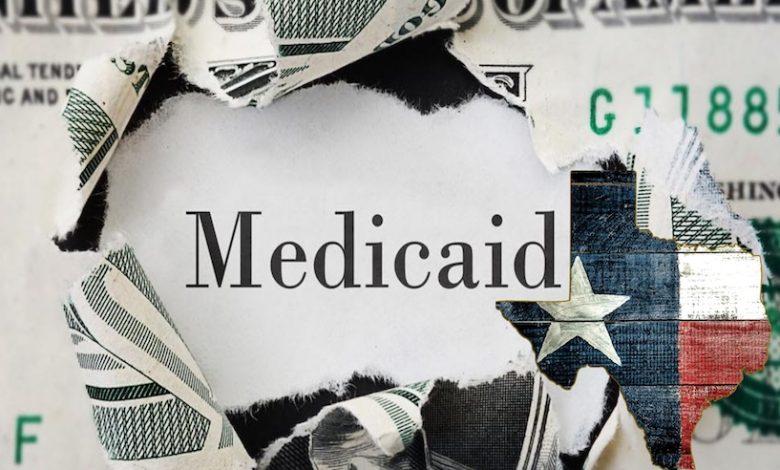
Texas – Millions of Texans who rely on Medicaid and Medicare could face serious uncertainty as President Donald Trump signals a potential shift in how these programs are funded, raising concerns across the state and beyond. The issue stems from growing tensions between earlier promises to protect these programs and more recent remarks suggesting the federal government may step back from its role.
Texas is home to a vast number of vulnerable residents who depend on these programs. According to available data, more than 4.8 million Texans are enrolled in Medicare, while approximately 4.6 million are covered through Medicaid and CHIP. Among them, over 700,000 individuals rely on both programs at the same time, often because they are elderly, disabled, or living with serious health conditions. These programs act as a lifeline, especially in a state that has not expanded Medicaid and continues to have one of the highest uninsured rates in the country.
Growing Concerns Over Funding Shift
During his second term, President Trump repeatedly stated that he would protect Medicare, Medicaid, and Social Security. However, recent developments have created confusion and concern. His administration has already outlined Medicaid cuts in legislative proposals, and now, new remarks suggest an even broader shift may be under consideration.
Speaking at a White House Easter lunch, Trump floated the idea of moving responsibility for these programs away from the federal government and onto individual states. “We can balance the budget. We can have a surplus if you can stop that. And that does not include Medicare, Medicaid—that’s even bigger,” he said. He continued, “We can’t take care of daycare. You got to let a state take care of daycare. And they should pay for it, too. They should pay. They’ll have to raise their taxes, but they should pay for it. And we could lower our taxes a little bit to them to make up for it. It’s not possible for us to take care of daycare, Medicaid, Medicare—all these individual things. They can do it on a state basis. You can’t do it on a federal [level]. We have to take care of one thing: military protection. We have to guard the country.”
These remarks have sparked strong reactions. Many fear that shifting responsibility to states like Texas could result in reduced coverage or stricter eligibility requirements, especially given the state’s already limited Medicaid access.
Impact on Texans and Vulnerable Populations
The potential consequences for Texas residents could be severe. Medicaid in Texas already has strict eligibility rules, with parents qualifying only if their income is roughly 12 to 15 percent of the federal poverty level. This has created a coverage gap affecting hundreds of thousands of low-income adults.
Additionally, after the end of pandemic-era protections, nearly 2.5 million people were removed from Medicaid rolls, many due to paperwork issues rather than changes in eligibility. Any further cuts or restructuring could deepen this gap and leave even more people without access to care.
For those who are dually eligible for both Medicare and Medicaid, the stakes are even higher. Medicaid often covers services that Medicare does not, such as long-term care and certain out-of-pocket costs. Without that support, many could struggle to afford essential care.
Legal and Political Challenges Ahead
Despite the president’s remarks, it is important to note that Medicare and Medicaid are established under federal law. This means they cannot simply be eliminated through executive action. However, significant funding reductions could still be implemented through Congress, particularly through budget proposals or legislative changes.
If such efforts move forward, they are expected to face strong opposition from lawmakers and the public. The idea of reducing federal support for programs that serve millions of seniors, children, and disabled individuals is likely to spark intense debate.
As discussions continue, millions of Texans remain caught in the middle, facing uncertainty about the future of the healthcare coverage they depend on.