Texas lawmakers explore bold plan to absorb oil-rich New Mexico counties as proposal draws mixed reactions

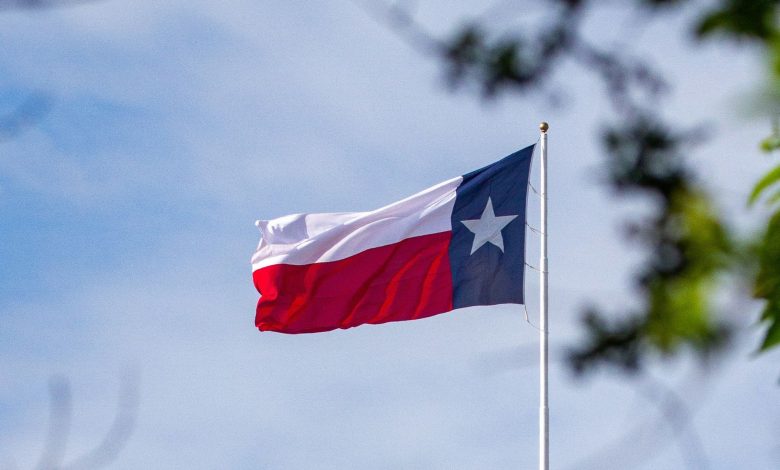
Texas – Texas lawmakers are now examining what some are calling one of the most unusual political proposals in recent years, as officials begin exploring whether parts of neighboring New Mexico could one day become part of Texas. The move, which surfaced in official legislative planning documents, is not tied to criminal charges or legal punishment, but instead stems from a broader political and economic push driven by ideology, geography, and long-standing regional tensions.
At the center of the discussion is a newly assigned task for the Select Committee on Governmental Oversight, which has been directed to study the feasibility and impact of potentially adding adjacent New Mexico counties to Texas. The reason behind this effort is rooted in claims that some communities in southeastern New Mexico feel disconnected from their own state government and more aligned with nearby West Texas.
The proposal quickly drew widespread attention after it appeared in a 53-page list of interim legislative priorities for Texas’ upcoming session. While most of the document focused on routine topics like teacher retention and infrastructure, this idea stood out sharply, sparking confusion and debate almost immediately.
A controversial idea gains attention
The discussion centers heavily on Lea County, a large oil-rich region in southeastern New Mexico. Covering more than 4,300 square miles, the county is geographically closer to cities like Lubbock and Odessa than to Santa Fe, the state’s capital. With a population of around 75,000 people, it is not densely populated, but it carries significant economic weight due to its energy resources.
Supporters of the idea argue that residents in this region share stronger cultural and political ties with Texas than with New Mexico’s leadership. Many local voices have expressed frustration with what they see as a disconnect from the more progressive policies coming out of Santa Fe. That sentiment has fueled interest in the idea of breaking away and joining Texas.
Texas House Speaker Dustin Burrows has openly supported exploring the possibility, even suggesting that the region could come “back to Texas, where it rightfully belongs.” His comments reflect a broader belief among some Texas leaders that the move could strengthen the state both politically and economically, especially by adding valuable oil-producing land.
The idea has also been linked to a broader online movement known as “New MeX-it,” which pushes for certain New Mexico counties to secede and align with Texas. While the concept has gained traction in some circles, it remains highly controversial and far from becoming reality.
Strong reactions and major obstacles
Officials in New Mexico have strongly rejected the proposal. A spokesperson for Governor Michelle Lujan Grisham dismissed it as “not a serious” idea, making it clear that the state has no intention of giving up any of its territory.
In a more pointed response, the governor’s office said, “We have every intention of keeping the great state of New Mexico fully intact, but Texas can study it all they want.” The statement went further, adding, “While they’re at it, they could also study how New Mexico has reduced methane emissions in the Permian Basin by half compared to their state. If Texas followed our lead, it would be a win-win for Texans and the planet.”
Despite the strong reactions, the idea continues to be studied, though experts say the chances of it actually happening are extremely low. For such a move to take place, both Texas and New Mexico would need to pass laws approving the change, and then Congress would also have to sign off on it.
That level of agreement is highly unlikely, especially given that Democrats control New Mexico’s government and would have little incentive to support a plan that could reduce their state’s land, resources, and political power.
Even within New Mexico, attempts to create a legal pathway for counties to secede have already failed. Earlier this year, a proposal introduced by state lawmakers Randall Pettigrew and Jimmy Mason aimed to amend the state constitution to allow such moves, but it never even made it to a hearing.
Historically, changes to state borders are extremely rare. The last time a similar adjustment occurred was in 1961, when a tiny piece of land was transferred from Minnesota to North Dakota. Compared to the vast size of Lea County, that change was almost insignificant.
Still, the conversation highlights deeper political divides and shifting alliances in parts of the country. As Burrows noted, the debate is about more than just land, saying the “conversation is ultimately about culture, opportunity, and the right to choose a path that reflects the shared values of the Permian and Delaware basins.”
For now, the proposal remains just that — a proposal. With legal, political, and logistical hurdles standing firmly in the way, the idea of Texas absorbing parts of New Mexico may continue to generate headlines, but it is unlikely to reshape the map anytime soon.