Trump claims he’s “the least pressured person ever” as Iran war drags on, but remarks spark outrage as the majority of voters blame him for rising costs

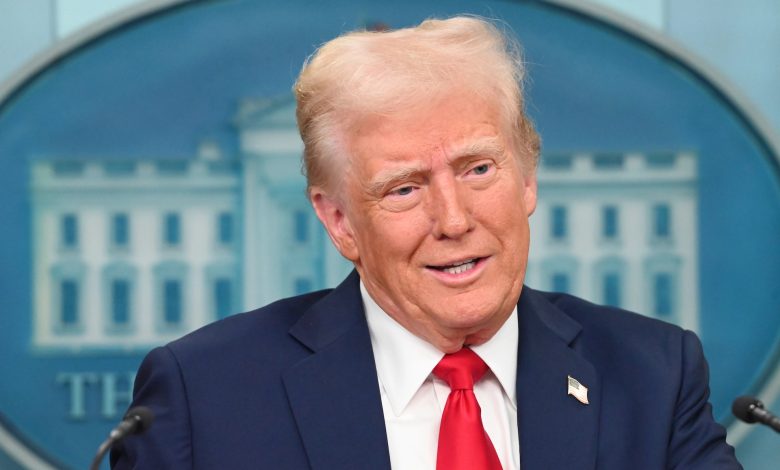
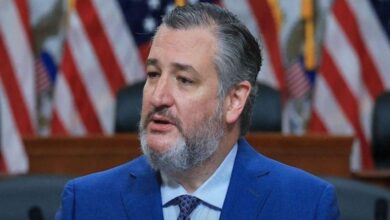
Texas – A deep fracture is beginning to show inside the Republican Party, and it is no longer just about policy — it is about tone, limits, and identity. Nathaniel Moran, a Republican lawmaker from East Texas, has openly pushed back against President Donald Trump after the president suggested the United States could wipe out the “whole civilization” of Iran if its leaders refused to comply with demands.
Moran, who had previously backed military action, drew a firm boundary this time. He stressed that power must come with restraint, warning that destroying an entire nation crosses a line. “So, let me be clear: I do not support the destruction of a “whole civilization.” That is not who we are, and it is not consistent with the principles that have long guided America,” he said.
Others joined in. Lisa Murkowski called the rhetoric unacceptable, saying it “cannot be excused away as an attempt to gain leverage in negotiations with Iran..” and warning it was “an affront to the ideals our nation has sought to uphold and promote around the world for nearly 250 years.” Meanwhile, Kevin Kiley rejected the idea outright, stating, “The United States does not destroy civilizations. Nor do we threaten to do so as some sort of negotiating tactic.”
Yet even as some Republicans raised alarms, others stood firmly behind the president. Jodey Arrington praised Trump, saying, “thank God we have a commander in chief who is not full of empty rhetoric.” The divide is clear — and growing.
Calm Words, Rising Pressure
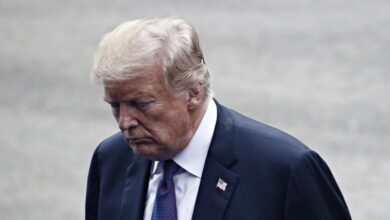
Against this backdrop, Trump himself has taken a strikingly relaxed tone about the ongoing conflict. On April 23, he posted on Truth Social that he is “possibly the least pressured person ever to be in this position.” He doubled down moments later, adding, “I have all the time in the world, but Iran doesn’t. The clock is ticking!”
That message, meant to project control, has instead fueled criticism. The conflict, now stretching into its eighth week, shows little sign of a clear end. There is no visible exit plan, no defined path forward — only a steady drip of statements and rising tension.
For many Americans, the issue is not just foreign policy. It is hitting much closer to home.
A Reuters/Ipsos poll released April 24 found that 77 percent of registered voters blame the president for the surge in gas prices that followed the start of the conflict. Even more striking, 55 percent of Republicans — his own base — say the same. That number alone signals something deeper than ordinary disagreement.
Economic Strain and Mixed Signals
The pressure is also building inside the administration. Chris Wright had earlier promised gas prices would drop below $3 “before too long.” But more recently, he admitted “that might not happen until next year.” Trump quickly dismissed that, calling his own energy chief “totally wrong.”
This back-and-forth has added to a sense of uncertainty. At the same time, leadership changes and exits are stacking up. The resignation of Joe Kent, the removal of Pentagon officials, and the forced departure of Navy Secretary John Phelan have all raised questions about stability behind the scenes.
A Justification Under Scrutiny
When asked what the country gains from the conflict, Trump framed the goal as “Iran without a nuclear weapon.” On the surface, that sounds simple. But the reality is more complicated. Intelligence assessments have long suggested Iran was not actively pursuing such a weapon.
The claim, however, has been repeated for years by Benjamin Netanyahu, who has consistently warned that Iran is “two weeks away” from developing one — a statement he has made since 1992.
This gap between stated goals and widely accepted intelligence has only added to skepticism.
A Clock Ticking at Home
Trump insists the clock is ticking for Iran. But politically, it may be ticking somewhere else entirely — inside his own coalition.
Rising costs, internal disagreement, and a war without a clear end are combining into something harder to manage than any single crisis. What began as a show of strength is now creating visible strain, not just across the country, but within the president’s own party.
And as voices like Moran’s grow louder, the question is no longer just about strategy abroad. It is about identity at home — what the United States stands for, how far it is willing to go, and whether unity can hold under pressure.
For now, Trump projects calm. But the reaction around him tells a different story — one where frustration is rising, patience is thinning, and the political cost may only be starting to unfold.