Texas congressman Moran breaks ranks with Trump over controversial threat toward Iran’s “whole civilization”

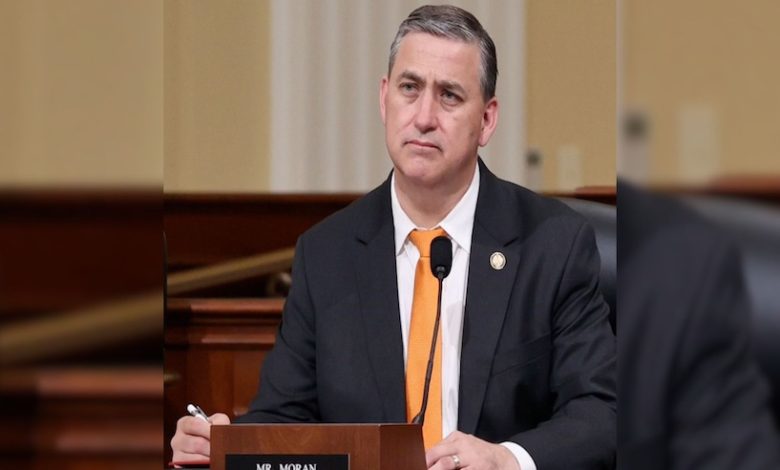
Texas – A sharp divide has emerged within Republican ranks after U.S. Rep. Nathaniel Moran publicly pushed back against President Donald Trump’s controversial remarks about Iran, signaling growing tension over how far the United States should go in escalating conflict.
Moran, a Republican from East Texas, responded after Trump warned that the United States could wipe out the “whole civilization” of Iran if its leaders failed to comply with demands to reopen the Strait of Hormuz. While Moran had previously supported the president’s military actions, he drew a clear line when it came to rhetoric that suggested total destruction.
In a detailed statement, Moran emphasized that strength alone does not define the nation. “The United States of America must always be prepared to use overwhelming military force when necessary to defend our national security interests and protect Americans at home and abroad,” he said. However, he added that such power must be used within clear limits tied to law and principle.
A line drawn on values and limits
Moran made it clear that while he backs a strong national defense, he does not support language or actions that go beyond what he sees as America’s moral and constitutional boundaries. “So, let me be clear: I do not support the destruction of a “whole civilization.” That is not who we are, and it is not consistent with the principles that have long guided America.”
His remarks marked a notable break from Trump, especially given that Moran had earlier supported U.S. strikes tied to the Iran conflict. He explained that those actions aligned with presidential authority under the Constitution and the War Powers Resolution, as well as with “the ultimate goal of protecting national security interests.”
But Moran stressed that there is a difference between targeted military action and sweeping threats. “What sets America apart is not only our strength, but how we use it,” he said, reinforcing a theme that would echo throughout his response.
He also warned that abandoning ethical standards could damage the country’s global standing. “Our nation has always conducted military operations for just causes and through just and moral means. This must continue in the future; otherwise we forfeit our legitimacy to lead the world.”
Growing unease inside the GOP
Moran’s statement did not stand alone. It came as unease spread among some Republicans in Congress over Trump’s rhetoric and the direction of the conflict with Iran.
U.S. Sen. Lisa Murkowski of Alaska also criticized the president’s language, rejecting the idea that it could be dismissed as negotiation strategy. She wrote that the statement “cannot be excused away as an attempt to gain leverage in negotiations with Iran..” and warned, “This type of rhetoric is an affront to the ideals our nation has sought to uphold and promote around the world for nearly 250 years.”
Similarly, U.S. Rep. Kevin Kiley, a California independent who aligns with Republicans, rejected the notion of threatening destruction on such a scale. “The United States does not destroy civilizations. Nor do we threaten to do so as some sort of negotiating tactic,” he wrote.
Despite these criticisms, many Republicans remained silent, while others openly supported Trump’s approach. U.S. Rep. Jodey Arrington of Abilene praised the president during a Fox Business appearance, saying, “thank God we have a commander in chief who is not full of empty rhetoric.”
Balancing force with responsibility
Moran’s response reflects a deeper debate about how the United States should project power. While he reaffirmed his support for strong defense measures, he repeatedly returned to the idea that power must be guided by responsibility.
“And, a President should have the latitude to make decisions to that end, but only to the extent that those decisions are also consistent with the inherent authority of a Commander-in-Chief under the U. S. Constitution and the provisions of the War Powers Resolution,” he said.
He also highlighted the importance of protecting innocent lives, writing, “But, how we protect the lives of the innocent is just as important as how we engage the enemy.”
For Moran, the issue is not whether the United States should act, but how it chooses to act. His message suggests that even in moments of high tension, there are limits that should not be crossed.
Closing his statement, Moran framed the debate in broader terms about national identity and purpose. “America is great because America is good.”
As the conflict with Iran continues to unfold, Moran’s comments reveal a fault line that may grow wider—one that separates those who support an aggressive posture without restraint from those who insist that even the use of power must remain tied to long-standing principles.