Florida Democrat quits Congress in disgrace ahead of expulsion vote after ethics panel finds her guilty in explosive fraud scandal

Texas – A growing wave of pressure, scandal, and internal party tension is beginning to reshape Capitol Hill, with multiple lawmakers stepping down as investigations and public scrutiny intensify. In recent weeks, resignations have not come quietly but under the weight of serious allegations, ethics probes, and the looming threat of expulsion votes.
One of the most striking examples came with the sudden collapse of Texas Rep. Tony Gonzales, who confirmed he would step down while facing an escalating ethics investigation tied to his conduct with staffers. His decision followed mounting pressure from within his own party, including calls to “resign immediately” and warnings that an expulsion vote would be supported if he refused. Gonzales admitted to an affair with a staff member—something prohibited under House rules—and acknowledged “a lapse in judgment,” even as further allegations and disturbing details continued to surface.
That turbulence did not stop there. Just days later, California Rep. Eric Swalwell also announced his resignation amid a separate storm of allegations involving se-ual misconduct. While Swalwell publicly acknowledged past personal mistakes, he firmly denied the more serious accusations, insisting he would fight them. At the same time, he admitted the political reality surrounding his position had shifted, with the controversy threatening to overshadow his role in Congress. His exit came as pressure mounted and the possibility of disciplinary action loomed, reinforcing a growing pattern where lawmakers are stepping aside before formal punishment can be imposed.
And these departures were not the only ones—the latest resignation from a Florida congresswoman adds to a growing string of high-profile exits that have fueled a deepening sense of instability and turbulence within Congress.
Ethics scandal triggers abrupt resignation
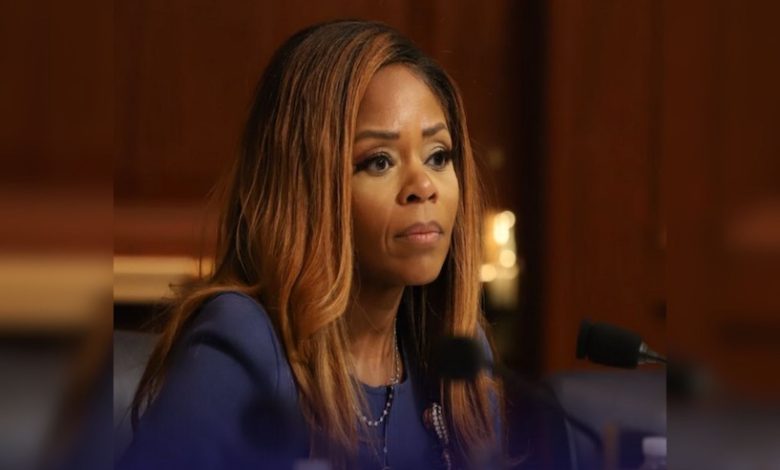
Florida Rep. Sheila Cherfilus-McCormick exited Congress on Tuesday in a dramatic move that came just as a House Ethics panel was preparing to weigh potential sanctions against her. The resignation followed a damaging finding last month in which she was found guilty on 25 out of 27 ethics violations tied to allegations that she embezzled millions.
Her departure came at a critical moment. Lawmakers were already discussing disciplinary action, and a formal expulsion vote was gaining traction. Rather than face that outcome, she stepped down—while strongly pushing back on the process that led to the findings. “This was not a fair process,” Cherfilus-McCormick complained in her resignation notice.
She went further, arguing that her ability to defend herself had been undermined. “The Ethics Committee refused my new attorney’s reasonable request for time to prepare my defense. By going forward with this process while a criminal indictment is pending, the Committee prevented me from defending myself.”
Framing the situation as something larger than her own case, she warned Americans to be “very careful about the precedent we are setting in this country,” adding that “we do not punish people before due process is complete.” According to her, the nation is heading down a “dangerous path” that should concern people across political lines.
— Congresswoman Sheila Cherfilus-McCormick (@CongresswomanSC) April 21, 2026
Criminal charges and financial allegations
The controversy surrounding Cherfilus-McCormick extends beyond ethics violations into serious federal charges. In November, the Justice Department accused her, along with her brother and two others, of misusing COVID relief funds and violating campaign finance rules.
At the center of the case is a $5 million overpayment tied to a vaccination staffing contract in 2021 involving her family’s healthcare company. Instead of returning the excess funds, prosecutors allege that the money was deliberately concealed. According to the Justice Department, the funds were “routed it through multiple accounts to disguise its source.”
If convicted on the 15 charges she faces, the consequences could be severe—up to 53 years in federal prison. Despite the mounting allegations, Cherfilus-McCormick has consistently denied wrongdoing.
Expulsion pressure reaches breaking point
The political pressure surrounding the case intensified rapidly in recent days. Greg Steube introduced a resolution to expel her from Congress, a rare and serious step that signaled how far the situation had escalated.
Support for the move grew among fellow Republicans, including Anna Paulina Luna, who publicly issued a blunt ultimatum.
“We have your expulsion vote ready to be called up on the 21st,” she wrote. “Either resign or be expelled. Those are your two options. So America is tracking: Sheila stole $5 million in FEMA funds.”
With the threat of a forced removal looming, the resignation appeared to come as a final attempt to avoid a historic expulsion vote on the House floor.
A shifting standard of accountability
The unfolding events point to a deeper shift in how Congress handles controversy. Lawmakers are facing faster consequences, and the margin for surviving a scandal appears to be shrinking. Internal party dynamics, media exposure, and public reaction are converging to create a more volatile political environment.
For Cherfilus-McCormick, the combination of ethics findings, criminal charges, and an impending expulsion vote proved impossible to withstand. Her resignation closes one chapter, but it also raises broader questions about due process, political pressure, and how justice is applied within the halls of power.
As more investigations continue and scrutiny remains intense, the recent wave of resignations may not be the end—but rather a sign of deeper turbulence still unfolding in Washington.