“I don’t want to be out of the arena of the political battle”: Trump’s Supreme Court plan hits setback as Ted Cruz rejects push three times to stay in political fight

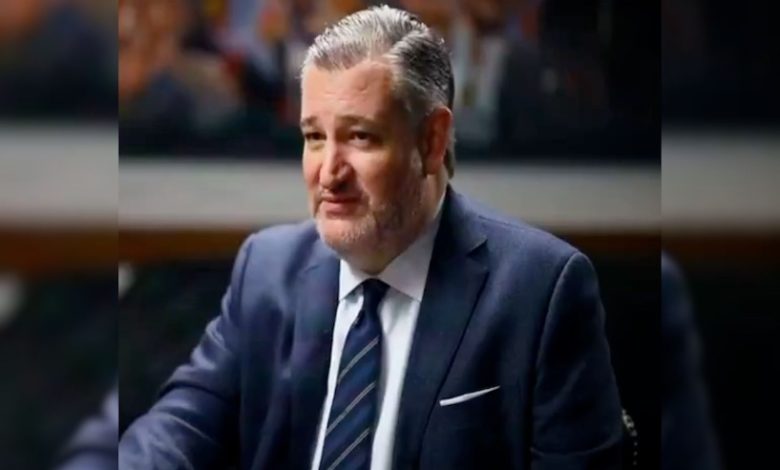
Texas – Donald Trump’s quiet effort to reshape the U.S. Supreme Court has run into a clear and repeated obstacle — Ted Cruz himself. Despite being floated as a top contender for a future vacancy, the Texas senator has now revealed he has turned down the idea not once, but three separate times, signaling a firm refusal to leave the political frontlines.
The tension highlights a deeper divide between Trump’s long-term judicial ambitions and Cruz’s own vision for his role in American politics — one rooted not in legal neutrality, but in active political combat.
Cruz Draws a Firm Line
Cruz made his position unmistakably clear during a live interview, explaining that his decision was not recent, nor uncertain. It dates back to Trump’s first term, when the president seriously considered him for multiple openings on the high court.
“In the first Trump term, the president spoke to me seriously about all three vacancies, and three times I said no, because I don’t want to be out of the arena of the political battle,” Cruz said.
.@gerardtbaker asks Senator @tedcruz if he would accept a United States Supreme Court nomination. pic.twitter.com/fG7vHsQpej
— Wall Street Journal Opinion (@WSJopinion) April 15, 2026
That statement cuts directly against the expectations surrounding his potential nomination. While many politicians view a Supreme Court seat as the pinnacle of legal influence, Cruz framed it as a step away from the kind of work he values most — direct engagement in policy and partisan debates.
He reinforced that stance even more bluntly, stating: “I don’t want to be a judge.”
For Cruz, the role of a justice demands distance from political disputes — something he openly rejects. “A principled federal judge stays out of policy fights and stays out of political fights. If I were a judge, I would do that. I don’t want to do that. I want to be right in the middle of political and policy fights, and if you want to do that, the right place to do that is an elected office.”
Trump’s Strategy Faces Resistance
Trump’s interest in Cruz is not casual. According to sources familiar with his thinking, the former president sees Cruz as a uniquely effective nominee — someone who could navigate a deeply divided Senate with unusual ease.
At one point, Trump even suggested Cruz could unite both parties behind his confirmation, joking: “He’s the only guy I know who’ll get 100% of the Democrat vote, and 100% of the Republican vote.”
He added a sharper edge to that praise, saying: “They want him out of there. He is such a pain in the ass.”
Despite the humor, the strategy behind Trump’s thinking is clear. A figure like Cruz, well-known, legally experienced, and politically battle-tested, could be a powerful choice if a vacancy opens — especially in a tense pre-midterm environment.
A Potential Vacancy Looms
The speculation surrounding Cruz’s possible nomination is tied closely to uncertainty about the future of Samuel Alito, one of the court’s most conservative members. At 76, Alito has become the subject of growing retirement rumors, particularly as political timing could favor Republicans securing a replacement before the next election cycle.
There is also the possibility of a vacancy involving Clarence Thomas, another senior conservative justice. Both names have been floated as part of scenarios where Trump could act quickly to influence the court’s direction.
Republican leadership appears ready for such a moment. John Thune acknowledged the possibility, stating: “That’s a contingency I think around here you always have to be prepared for,” and adding, “And if that were to happen, yes, we would be prepared to confirm.”
This readiness underscores how critical timing could be. With midterm elections approaching and political control uncertain, any vacancy could trigger a rapid and highly strategic confirmation process.
Credentials vs. Conviction
Ironically, Cruz’s rejection is not due to a lack of qualifications. In fact, his legal background aligns closely with what many would expect from a Supreme Court nominee.
He graduated magna cum laude from Harvard Law School, clerked for former Chief Justice William Rehnquist, and served as Texas solicitor general. He has also argued nine cases before the Supreme Court — a rare level of direct experience.
By traditional standards, Cruz would be considered a strong candidate. Yet his refusal highlights a different kind of calculation — one driven not by credentials, but by personal and political priorities.
Political Fallout and Bigger Stakes
Cruz’s decision creates a complication for Trump’s long-term judicial plans. While other conservative figures may still be considered, few combine legal experience and political visibility in the same way Cruz does.
It also raises a broader question about ambition in Washington. For some, lifetime judicial power is the ultimate goal. For others, like Cruz, influence is measured differently — through active participation in shaping policy, engaging in debates, and remaining accountable to voters.
If Cruz were ever to change his mind and accept a nomination, it would trigger a special election in Texas to fill his Senate seat — adding another layer of political consequence. But for now, that scenario appears firmly off the table.
Trump may still see Cruz as the ideal candidate. Cruz, however, has made his stance unmistakably clear: he has no intention of stepping away from the political battlefield.
In a moment where control of the courts carries enormous weight, this refusal is more than personal — it reshapes the options available at the highest level.