Texas bill aiming to deport individuals over political beliefs sparks fierce backlash as critics warn it could undermine constitutional freedoms

Texas – A controversial proposal out of Texas is rapidly turning into a flashpoint in the national debate over immigration, security, and the limits of government power. What began as an effort to confront what some lawmakers describe as ideological threats has instead triggered a wave of criticism, with opponents arguing the measure risks crossing a fundamental constitutional boundary.
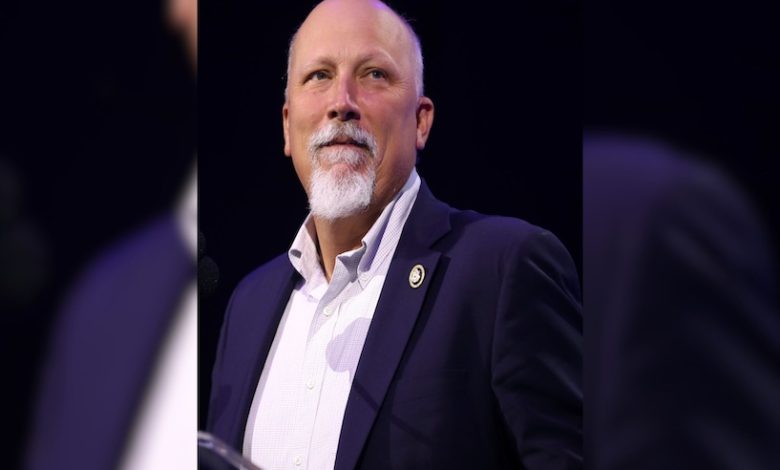
At the center of the storm is legislation introduced by Chip Roy, known as the “Mamdani Act.” The bill would dramatically expand the government’s authority over non-citizens by allowing deportation or denaturalization of individuals tied to certain ideologies, including socialist, communist, and Islamist movements. It would also go further—blocking entry into the United States and denying citizenship to people associated with those beliefs, while limiting the ability of courts to review how such decisions are enforced.
Supporters frame the proposal as a necessary line of defense. Roy has argued that the country should not admit individuals who “seek to undermine the Constitution” or push ideas that clash with what he sees as core American values. From that perspective, the bill is positioned as a preventative tool—aimed not just at actions, but at ideologies viewed as dangerous.
Yet almost immediately, the conversation shifted away from national security and toward a more fundamental concern: whether the government can, or should, target people based on what they believe.
Backlash centers on free speech concerns
Much of the reaction has focused on the idea that the bill does not simply regulate behavior, but reaches into the realm of thought and expression. Critics argue that this shift—from punishing actions to policing beliefs—represents a serious departure from long-standing constitutional protections.
Online, the response has been swift and intense. Many commenters framed the proposal as a direct challenge to the First Amendment.
“It would be hard to draw up another bill that’s a clearer violation of the First Amendment. Viewpoint discrimination is not a legal thing,” one commenter wrote.
Others took aim at what they see as selective enforcement. “The party of free speech for racists only,” one Reddit user wrote, suggesting the bill targets certain viewpoints while leaving others untouched.
That sense of inconsistency came up repeatedly in discussions. Some questioned how lawmakers would define the ideologies listed in the bill, pointing out that political labels are often fluid and widely interpreted.
“Both the GOP and Democrats advocate policies that can easily be categorized as Socialist or Communist,” one user argued, highlighting the difficulty of drawing clear lines.
Doubts over intent and feasibility
Beyond constitutional concerns, some observers dismissed the proposal as unlikely to move forward at all. For them, the bill appears less like a serious legislative effort and more like a political signal.
“It’s political theater in the sense the bill isn’t going anywhere,” one commenter wrote, while another added, “It’s election season and most politicians are just manipulating you.”
These reactions reflect a broader skepticism about timing. With elections approaching, proposals that generate strong reactions—whether support or outrage—often take on added political significance.
Still, not all responses were negative. A smaller but vocal group expressed support for the idea behind the bill, even if they doubted its chances of passing.
“It won’t pass, but it’s a great plan,” one comment read, while another described it as “common sense.”
Historical echoes and broader fears
For some critics, the concern goes beyond this single proposal. They see it as part of a pattern that could expand over time, potentially opening the door to wider restrictions on dissent.
“They declared communists illegal and then removed political rivals,” one commenter wrote, drawing a comparison to past periods when governments took action against ideological groups.
That kind of warning reflects a deeper fear: that once the line is crossed, it becomes easier to redraw it again and again. What begins with a narrow focus on certain ideologies could, critics argue, evolve into broader efforts to control political expression.
A debate with no easy answer
At its core, the controversy surrounding the “Mamdani Act” comes down to a difficult and unresolved question. Is targeting ideology a legitimate tool for protecting national security, or does it represent a fundamental threat to free speech?
Supporters argue that ideas can be dangerous, especially when tied to movements that challenge democratic systems. Critics counter that the strength of those systems lies precisely in their ability to tolerate—even protect—controversial or unpopular views.
As the debate unfolds, the bill has already succeeded in one respect: it has forced a deeper conversation about where the boundaries of freedom should lie. Whether it advances or stalls, the reaction it has sparked shows just how sensitive—and how consequential—that question remains.