MAGA clash erupts as Ted Cruz and allies torch Trump’s “absolutely terrible” airline bailout plan, warning it could turn into a costly political disaster

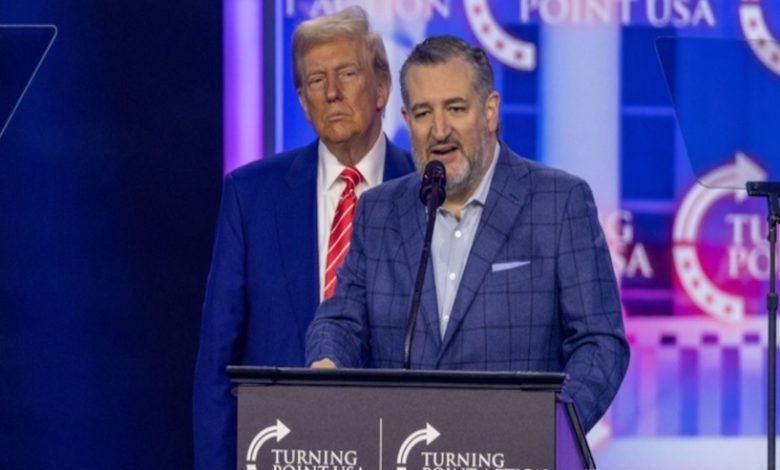
Texas – Donald Trump’s latest economic intervention idea is triggering a fierce backlash inside his own political camp, exposing a deep divide among Republicans just as high-stakes elections loom and financial power increasingly shapes political outcomes.
The president’s willingness to step in and rescue Spirit Airlines — a company that has filed for bankruptcy twice in less than a year — is now colliding with sharp resistance from some of his most loyal allies. What Trump frames as a job-saving move is being recast by critics within his own party as a risky, costly gamble that could backfire politically.
At the center of the controversy is a proposed plan that could see the federal government lend up to $500 million to the struggling airline and potentially take a 90-percent ownership stake. For Trump, the justification is straightforward. “It’s 14,000 jobs, and maybe the federal government should help that one out,” he said during a CNBC interview, signaling a readiness to intervene in the private sector to prevent economic fallout.
But that argument has not unified Republicans — it has fractured them.
Republican Backlash Erupts Over Bailout Plan
Few critics have been louder than Texas Senator Ted Cruz, a long-time Trump ally who did not hold back in his reaction. Calling the proposal outright flawed, Cruz declared, “This is an absolutely terrible idea,” adding that “the government doesn’t know a damn thing about running a failed budget airline.”
That blunt assessment reflects a broader concern among conservative lawmakers: that government intervention in a failing private company contradicts core Republican economic principles.
Sean Duffy echoed that skepticism, warning that the plan risks throwing more money into a business that has already struggled to survive. “What we don’t want to do is put good money after bad, and there’s been a lot of money thrown at Spirit, and they haven’t found their way into profitability. And so would we just forestall the inevitable and then own that?” he said. He drove the point further with a blunt conclusion: “We can’t make dumb investments.”
Duffy also questioned the basic logic behind the bailout. “What would someone buy?” he asked. “If no one else wants to buy them, why would we buy them?”
That line of thinking was reinforced by Tom Cotton, who framed the issue in terms of market reality. “If Spirit’s creditors or other potential investors don’t think they can run it profitably coming out of its second bankruptcy in under two years, I doubt the U.S. Government can either. Not the best use of taxpayer dollars.”
Together, these responses highlight a rare but growing internal clash — one where Trump’s instinct to act collides with a faction of Republicans wary of government overreach and financial risk.
Inside the White House: A Divided Strategy
Despite the criticism, signals from the administration suggest the idea is still alive.
Karoline Leavitt confirmed that discussions are ongoing, stating, “This is something the Commerce Department and the president are tracking,” and emphasizing that “The aviation industry is very important to this president and this White House.”
Behind closed doors, however, the debate appears far from settled.
Reports indicate that Howard Lutnick and Duffy have taken opposing positions in internal discussions. Lutnick reportedly presented the bailout as a potential political advantage ahead of the midterms — a move that could signal decisive leadership and protect jobs. Duffy, by contrast, warned that it could easily be viewed as wasteful spending, especially at a time when voters are increasingly sensitive to government costs.
Insiders suggest Trump remains focused on the political upside: preserving jobs and projecting economic control. Yet even within his own administration, there is concern that such a move could alienate fiscal conservatives and reinforce criticism about government interference.
Political Risk and Broader Implications
What makes this clash especially significant is its timing. With elections approaching, every major economic decision carries political weight. A bailout framed as saving jobs could resonate with some voters — but the image of the government taking control of a failing airline could just as easily fuel criticism about misuse of taxpayer money.
The divide also exposes a deeper tension within the Republican Party. On one side is a more populist, intervention-friendly approach tied to Trump’s leadership style. On the other is a traditional conservative stance that resists government involvement in private business failures.
That tension is not just theoretical — it is playing out in real time, with high-profile figures publicly disagreeing.
Even Trump’s allies are warning that the optics could be damaging. The idea of the government owning a struggling airline raises uncomfortable questions about accountability, efficiency, and long-term costs. If the company fails again under government control, the political fallout could be severe.
A Defining Test of Strategy and Power
This episode is about more than one airline. It reflects a broader shift in how political power, economic policy, and public perception are colliding in today’s political landscape.
Trump’s willingness to push forward despite resistance shows his continued influence — but the pushback reveals limits to that control, even within his own party.
As the debate continues, one thing is clear: the outcome will not just affect the future of a single airline. It will shape how voters view government intervention, fiscal responsibility, and leadership heading into a critical election cycle.
And in a moment where every decision is magnified, even allies are now asking whether this is a bold rescue — or a costly mistake waiting to unfold.