Texas Senator Cornyn slammed by frustrated voters after blaming Democrats for rising costs despite decades in public office

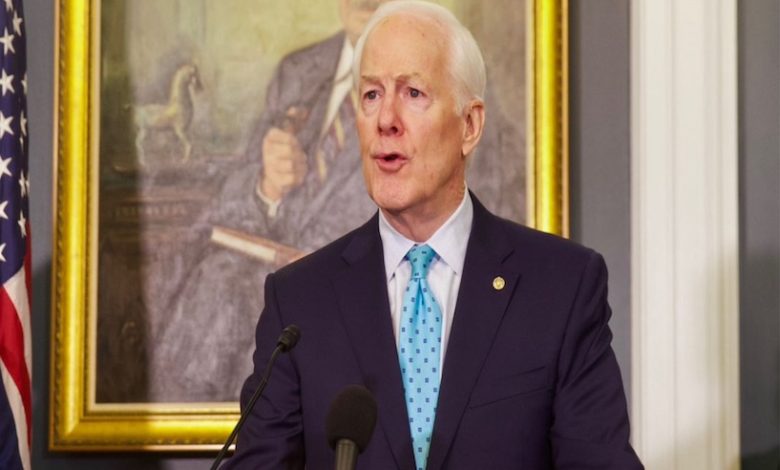
Texas – A sharp political clash over rising costs has quickly turned into something much bigger, as John Cornyn faces mounting backlash from voters across the spectrum. What started as a simple social media response has now opened a wider debate about accountability, long careers in Washington, and whether elected officials are truly delivering results for everyday Americans.
The controversy erupted after Cornyn shared a clip featuring James Talarico, a Democrat who directly challenged the senator’s decades-long record in public office. His criticism was blunt and aimed squarely at the financial struggles many families continue to face.
“John Cornyn has been in public office longer than I’ve been alive,” Talarico said.
“He’s had 40 years to lower the cost of housing, healthcare, groceries, utilities, and gas.
What’s the hold up?”
The message struck a nerve. At a time when housing remains expensive, medical bills continue to rise, and everyday essentials like food and fuel are still a burden, the question resonated far beyond party lines.
John Cornyn has been in public office longer than I’ve been alive.
He’s had 40 years to lower the cost of housing, healthcare, groceries, utilities, and gas.
What’s the hold up? pic.twitter.com/VOu7Sj831q
— James Talarico (@jamestalarico) April 23, 2026
A response that backfired
Cornyn answered the criticism on social media, placing responsibility on political opponents. “The main obstacle is Democrats,” he wrote. But instead of quieting the conversation, that response seemed to intensify it.
The main obstacle is Democrats. https://t.co/RCIfAMrEZa
— Senator John Cornyn (@JohnCornyn) April 23, 2026
Within hours, his post drew a wave of replies—many of them critical, frustrated, and deeply personal. The backlash stood out not only for its volume, but for where it came from. It wasn’t just Democrats pushing back. Many conservative voices and Republican voters joined in, signaling a deeper dissatisfaction.
For some, the issue wasn’t about party conflict at all. It was about results. After decades in office, critics argued, explanations alone were no longer enough.
That frustration quickly expanded into broader complaints about Washington politics. Commenters pointed to long-standing promises around affordability, border security, and election reform, questioning why progress has been slow or uneven.
Pressure from within the party
The timing made the situation even more difficult for Cornyn. He has already been under pressure from parts of the Republican base, particularly over issues like election laws. One key focus has been the SAVE America Act, a proposal centered on voter identification and proof-of-citizenship rules.
For many conservatives, that bill has become a symbol of action—or the lack of it. Critics argue that Republican leaders, including Cornyn, have not pushed aggressively enough in a divided Senate.
That frustration was clearly visible in the online reaction. One activist wrote: You’ve been in office for 24 years. You can’t possibly blame the democrats for your inability to pass photo voter ID. & proof of citizenship within 2 decades. Pass the SAVE America Act!”
Another user delivered an even harsher critique: “It’s wild that you don’t see how weak, pathetic, and feckless this tweet makes you look.
Signed: a Texan who is embarrassed by you and is eager to get @KenPaxtonTX in the senate. He wins and doesn’t whine about being an ineffective loser who can’t defeat liberals.”
And in one of the most striking comments, frustration boiled over completely: “So typical of loser RINOs who want to be in the minority… so they can sit around, do nothing, rake in more personal wealth, and in the meantime… blame Democrats for THEIR inaction. I can hardly wait to vote your sorry a** out in the upcoming runoff!”
A deeper political signal
What makes this moment significant is how quickly it grew beyond its starting point. A single post became a wider conversation about trust, performance, and whether long-serving politicians are still in step with voters.
For Republicans, the episode highlights a growing tension inside the party. Leaders are trying to balance traditional supporters with a more energized and impatient base that wants faster, more visible action. Moments like this risk exposing those divisions in a very public way.
For Democrats, the exchange provides a clear narrative. By focusing on Cornyn’s long tenure, Talarico framed him as part of a system that voters often feel is not working. The reaction suggests that message may be gaining traction.
At its core, the debate reflects something larger than one politician or one issue. Rising costs have become one of the most powerful forces in American politics. And as pressure builds, voters are looking less at party arguments and more at outcomes they can actually feel in their daily lives.
Cornyn’s office has not responded to the backlash, but the conversation shows no sign of slowing down. If anything, it is growing, fueled by frustration that extends far beyond a single exchange.
In the end, the episode sends a clear message: voters are no longer satisfied with explanations about who is to blame. Increasingly, they are asking a more direct and demanding question—after years in power, what has actually changed?