Dallas caves to pressure as Go. Abbott’s ultimatum forces city leaders to adjust police rules, comply with ICE cooperation demands, and avoid losing millions in grants

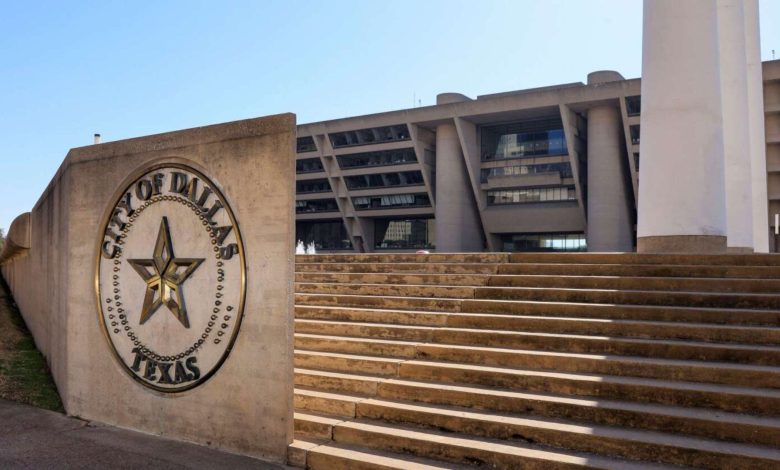
Dallas, Texas – A sharp confrontation between state leadership and local officials has forced a rapid policy shift in Dallas after Texas Governor Greg Abbott warned the city it could lose tens of millions of dollars in critical funding. Faced with that threat, Dallas leaders moved quickly to revise police policies tied to immigration enforcement, signaling a clear effort to align with state expectations and protect vital resources.
The turning point came after Abbott accused the city of failing to meet its obligations to cooperate with federal immigration authorities. His warning carried real weight. State officials indicated that more than $30 million in public safety grants could be pulled, along with additional funding tied to upcoming global events like the World Cup. For a city already relying on those funds for security planning, the stakes were immediate and significant.
Policy shift under pressure
In response, Kimberly Bizor Tolbert released a detailed memo outlining changes to the Dallas Police Department’s internal rules. The message was clear: the city would adjust its approach to ensure continued compliance and avoid losing funding.
According to the memo, Dallas remains “committed to maintaining eligibility for grant funding and strong coordination with state partners.” That commitment drove revisions to General Order 315.04, the policy at the center of the dispute.
The updated rules clarify that officers are allowed to ask about immigration status during lawful detentions, cooperate with federal immigration agents when needed, and share relevant information with federal authorities. These changes were designed to remove any ambiguity that state officials had flagged as problematic.
Balancing enforcement and public trust
While the policy shift aligns Dallas more closely with state expectations, city officials emphasized that their broader mission remains unchanged. Daniel C. Comeaux addressed concerns directly, stressing that public safety—not immigration enforcement—continues to guide the department.
“Our officers will follow the law, and our updated policy will affirm that we will cooperate with federal authorities when required. Moreover, our mission has not changed and DPD exists to protect the safety of everyone in Dallas, and we will not stop individuals only to determine their immigration status. Victims and witnesses should continue to feel safe to report crime.
“Year over year, Dallas has seen a reduction in crime. That progress is the result of focused enforcement and our strong partnerships with local, state, and federal agencies to hold violent offenders accountable. That work will continue. I have been clear from day one that we are not immigration enforcement and that has not changed: our role is public safety. However, we have the responsibility to operate fully within the law and ensure compliance with our legal requirements.
“We remain committed to just and constitutional policing and building strong partnerships at every level to deliver the highest level of safety to the residents we serve daily.”
His remarks highlight the tension at the heart of the issue: how to comply with legal requirements while maintaining trust with communities that may be wary of immigration enforcement.
The rule that triggered the clash
The conflict traces back to language in the previous version of General Order 315.04. That policy limited how long officers could detain individuals when immigration status became a factor.
“Officers may not prolong the detention of an individual in order to further investigate the individual’s immigration status or to hold them for federal authorities. Rather, at the expiration of the time reasonably required to carry out the purposes of the initial stop, the officer is required to release the individual, regardless of whether the officer suspects or even knows that the individual is undocumented or the individual has answered dishonestly or refuses to answer questions about immigration status,” it reads.
State officials argued that this restriction conflicted with agreements requiring cooperation with federal agencies like the Department of Homeland Security. That disagreement set the stage for Abbott’s ultimatum.
A broader warning to other cities
Dallas was not alone in facing pressure. Letters from the governor’s office also targeted Houston and Austin, signaling a wider push to enforce compliance across major Texas cities. The potential financial losses were even larger elsewhere—Houston risked losing more than $110 million, while Austin faced threats exceeding $2.5 million.
For Dallas, the decision to revise its policy appears to have been driven by the immediate need to secure funding, including $22 million already tied to World Cup safety preparations.
What comes next
The situation leaves lingering questions about the balance of power between state and local governments. While Dallas has adjusted its policies for now, the broader debate over immigration enforcement and local control is far from settled.
What is clear is that financial leverage played a decisive role. Faced with the possibility of losing critical funding, city leaders chose to act quickly, reshaping policy in a way that reflects both legal pressure and political reality.
As similar tensions continue across Texas, the Dallas case may serve as a blueprint—or a warning—for other cities navigating the same high-stakes intersection of law, funding, and public safety.