James Talarico says voter suppression is keeping Texas Republicans in power as he prepares for showdown with Ken Paxton

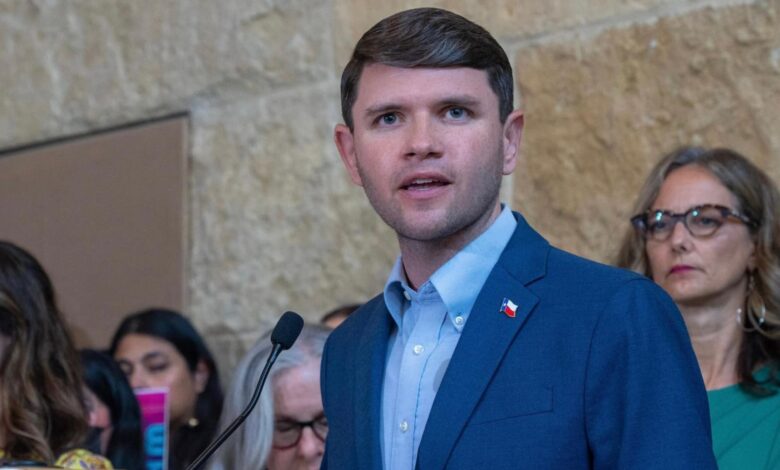
Texas – Texas Democrats have spent decades trying to break the Republican grip on statewide offices, and now Senate nominee James Talarico is arguing that election laws are a major reason those efforts have repeatedly fallen short.
As he prepares for a high-profile Senate battle against Republican Attorney General Ken Paxton, Talarico is making the case that the political playing field in Texas is tilted in favor of Republicans. Despite raising tens of millions of dollars and generating growing attention among Democrats, he acknowledges that winning statewide remains a difficult challenge.
Talarico recently spoke about those obstacles during a The Jamie Kern Lima Show podcast, where he argued that Democrats face more than just a partisan disadvantage in Texas. “Means you’re probably going to have to win by a little more than we would have to in a completely free and fair election,” Talarico said.
His comments come as Democrats hope to capitalize on what they see as a potentially competitive Senate race following Paxton’s victory over longtime Republican Sen. John Cornyn in the GOP primary. While Texas has remained firmly Republican for decades, some Democrats believe changing demographics and voter dissatisfaction could eventually make the state more competitive.
Still, Talarico is facing an uphill battle. Paxton enters the race with statewide name recognition, a loyal Republican base, and strong support from President Donald Trump, who backed him during the primary campaign.
A Debate Over Texas Voting Laws
At the center of Talarico’s argument is his belief that Texas election laws make it harder for many people to participate in elections.
Following the COVID-19 pandemic, Texas lawmakers approved several election-security measures designed to tighten voting procedures. Among the most significant was Senate Bill 1, commonly known as SB1.
The law requires voters to provide specific identification information when registering and voting. Acceptable identification includes a Texas driver’s license number, an election identification certificate, or the final four digits of a Social Security number. The legislation also prohibited drive-through voting and restricted the unsolicited distribution of mail ballot applications.
Supporters of the law argue that such measures help strengthen election integrity and increase public confidence in election outcomes. Critics, however, contend that the rules create additional barriers for some voters.
Talarico was among those who opposed the legislation when it moved through the Texas Legislature. “I will say that we already have a lot of voter suppression in Texas. It’s baked into our laws. I’ve fought fiercely against many of those laws when they were coming through the legislature,” Talarico said.
He also connected those policies to turnout levels across the state. “Texas is one of the hardest places to vote in the country as a result. It’s why we see such low voter turnout in our state compared to other states,” Talarico said.
Republicans Push Back
Republicans strongly reject Talarico’s claims and argue that election security measures are necessary safeguards rather than obstacles.
Zach Kraft, a spokesperson for the Republican National Committee, accused Talarico of placing too little emphasis on election security. “James Talarico wants illegal aliens to vote in our elections,” Kraft said.
He contrasted Talarico’s positions with those of Paxton and Trump. “While Talarico puts illegals first, Ken Paxton will continue to put Texans first by working with President Trump to get the SAVE America Act signed into law and ensure foreign citizens never vote in American elections,” Kraft said.
Republicans have also pointed to Talarico’s legislative record, noting that he voted against a bill that increased penalties for noncitizens who vote illegally in Texas elections.
The disagreement highlights a broader national debate over voting access and election security that continues to divide Democrats and Republicans.
Can Democrats Finally Break Through?
Talarico’s candidacy arrives at a moment when Democrats are once again attempting to crack a political wall that has stood for more than three decades. No Democrat has won statewide office in Texas since 1994, a streak that has become one of the party’s biggest frustrations.
Even though Texas ranks among the states with lower voter participation rates, turnout has actually increased in recent election cycles. Data from the United States Election Project shows that 56.6% of eligible voters cast ballots in the most recent presidential election, exceeding turnout levels seen in 2016, 2012, and 2004. Participation in the 2022 midterm elections also surpassed several previous midterm cycles.
Those figures have fueled disagreement over whether voting laws are truly suppressing turnout or whether other political factors are driving election results.
Despite the long odds, Talarico insists that history shows seemingly impossible political movements can succeed when supporters remain committed and organized. “We’re going to have to overcome that. We’re going to have to out-organize, out-work, out-hustle that voter suppression if we’re going to win,” Talarico said.
He encouraged supporters to look at past civil rights campaigns and labor movements that succeeded despite facing significant obstacles. “They were all up against a rigged system. So, if they can do that, we can certainly do that against this stacked deck,” Talarico said.
Whether that message resonates with enough Texas voters remains to be seen. But as the race against Paxton begins to take shape, the debate over voting laws, turnout, and election access is already becoming one of the defining issues of the campaign.