Governor Greg Abbott orders major workforce changes to help Texans enter high demand skilled trade careers

Austin, Texas – Texas is moving forward with a broad effort to strengthen its workforce and connect more residents with well-paying jobs in industries facing worker shortages. Governor Greg Abbott announced a series of directives aimed at improving workforce development programs across the state, saying Texas must prepare workers for the growing demand in skilled trades and other essential fields.
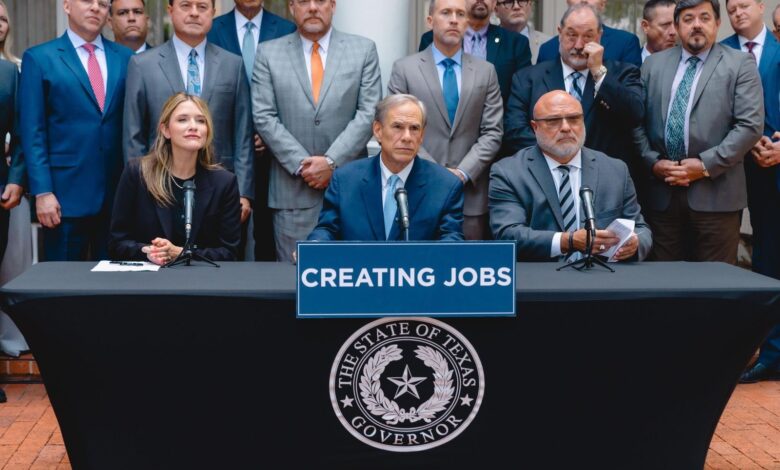
The announcement was made during a press conference at the Governor’s Mansion, where Abbott outlined immediate actions that several state agencies will take based on recommendations developed by the Texas Jobs Council.
“The demand for a high-skilled workforce has never been greater,” said Governor Abbott. “I tasked the Texas Jobs Council with developing recommendations that could be implemented immediately through either executive or agency action to make sure we have the best trained workforce in the United States. Based on those recommendations, I am directing four state agencies to take immediate action.”
The Texas Jobs Council was established by Abbott in March to identify both short-term and long-term solutions that could strengthen the state’s labor force. The council worked closely with the Texas Workforce Commission, the Texas Education Agency, the Texas Higher Education Coordinating Board, and the Texas Department of Licensing and Regulation to create a list of recommendations that could be put into place quickly.
Expanding opportunities through workforce programs
One of the agencies receiving new directives is the Texas Workforce Commission. Under Abbott’s plan, the agency will work to expand apprenticeship opportunities by identifying additional occupations that can be included in apprenticeship programs across various industries.
The commission will also create a central online resource where Texans can access career planning information in one location. State officials believe this will make it easier for job seekers to find training opportunities, educational pathways, and workforce resources.
Another key goal is helping people who often face challenges entering the workforce. The commission will develop more unified career pathways for veterans, foster youth, and individuals with disabilities. It will also launch digital Learning and Employment Records through the Tri-Agency Workforce Initiative to improve connections between employers and potential workers.
New focus on career education in schools
The Texas Education Agency has been directed to take several steps aimed at preparing students for careers earlier in life.
Among the changes is a plan to recruit more professionals from skilled trades industries to teach Career and Technical Education courses in high schools. The agency will do this by expanding local teaching permits and providing additional guidance to school districts.
The agency will also update its list of approved industry certifications to better match current labor market demands. Students in smaller and rural districts are expected to gain more opportunities through expanded mobile STEM labs that provide hands-on experiences and exposure to trade careers.
Another major initiative involves expanding the Texas Regional Pathways Network across the state. This effort is designed to increase access to workforce dual-credit opportunities, allowing high school students to earn valuable credentials while still completing their secondary education.
Higher education and licensing reforms
The Texas Higher Education Coordinating Board will launch a new campaign called “You Go to College for That” through the My Texas Future platform. The campaign is intended to raise awareness about trade careers and other high-demand occupations that do not require a traditional four-year degree.
In addition, career advisors and school counselors will receive new self-paced training focused on helping students understand opportunities available in growing industries. The board will also create community college dashboards that provide better information about valuable credentials and high-demand programs, helping schools make decisions that support workforce needs and student success.
The Texas Department of Licensing and Regulation will review age requirements to determine whether younger Texans can safely begin apprenticeships, Career and Technical Education programs, and licensed trades sooner.
The agency will also waive renewal fees and reduce continuing education requirements for more than 20,000 Career and Technical Education instructors. State leaders believe this move will encourage more experienced professionals to enter classrooms and train future workers.
Additional reforms include allowing certain training experiences to count toward work experience requirements for licensing while maintaining professional standards. Licensing exam options will also be expanded through both onsite and remote testing opportunities, helping workers move into licensed careers more quickly.
Abbott said these actions reflect Texas’ commitment to economic growth and expanding opportunities for residents. The Governor was joined during the announcement by Texas Jobs Council co-chair Megan Mauro, interim president of the Texas Association of Business, co-chair Brent Taylor, Southern Region vice president of the Teamsters, along with business leaders, labor representatives, and state officials.
The Texas Jobs Council is expected to reconvene this fall to continue its work. Members will develop recommendations for lawmakers ahead of the 90th Legislature, with a final report scheduled for release in November 2026.