Trump’s clashes with top Senate Republicans intensify as GOP lawmakers fear internal chaos could cost them Congress in November

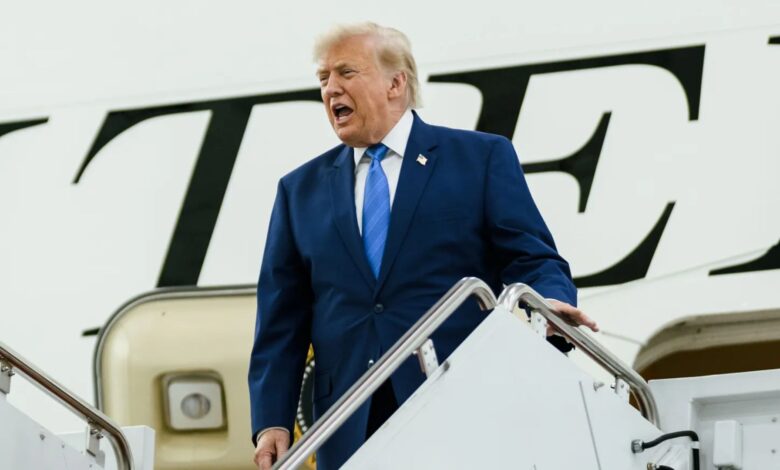
Texas – Texas has become the clearest example yet of the growing strain between President Donald Trump and Senate Republicans, a relationship that once appeared nearly unbreakable. The collapse of Sen. John Cornyn’s reelection bid after Trump turned against him has left many GOP senators asking a troubling question: if a lawmaker who backed the president more than 99 percent of the time can suddenly become a target, who is safe?
That concern is now spreading through the Republican conference as lawmakers head toward a difficult midterm election season. With control of both chambers of Congress potentially on the line in November, several senators are warning that repeated clashes between Trump and Senate leadership are creating confusion, damaging trust, and making it harder for Republicans to stay united.
The tension has become so significant that Trump is scheduled to meet with Republican senators this week after being invited to address the Senate Steering Committee by Sen. Rick Scott of Florida, one of the president’s closest allies in Congress.
Texas defeat becomes a warning sign for Republicans
Much of the unease inside the Senate GOP can be traced back to what happened in Texas.
Cornyn suffered a crushing primary runoff defeat after Trump endorsed his challenger and publicly attacked him as “very disloyal.” The loss shocked many Republicans because Cornyn had spent years supporting Trump’s agenda and voting with him nearly all of the time.
Reflecting on that experience, Cornyn suggested that many Republicans now view their relationship with Trump differently. “In my case, there was no real reason given my support for the president’s agenda,” Cornyn said.
He argued that the episode changed how senators see the president politically. “When he endorsed my primary opponent, people realized you could never do enough to stop the president from endorsing your primary opponent. I think that destroyed what remained of any kind of trust. I think that changed the playing field in a way where you see a lot more what I would call transactional relationships as opposed to one based on trust,” Cornyn said.
Those comments have resonated with many Republican lawmakers who increasingly feel they can be blindsided regardless of their loyalty.
Frustration grows over surprise decisions
The trust problem has only deepened in recent weeks. One major source of frustration came when Trump abruptly directed Jay Clayton, his nominee to become director of national intelligence, not to attend a scheduled Senate confirmation hearing.
The decision reportedly caught Senate Majority Leader John Thune and other Republican leaders completely off guard. The move disrupted plans to advance Clayton’s nomination and complicated efforts to move forward on other major legislation. Asked why Trump had suddenly changed course, Thune could only respond, “Good question.” “I’ve never been asked to slow a nomination down before,” he added.
Behind the scenes, Republican lawmakers reportedly viewed the episode as another example of poor communication between the White House and Senate leadership. One senior Republican aide said many senators have become accustomed to sudden and difficult-to-explain decisions. “This is par for the course. Before, members might be appalled, then it becomes that members are frustrated. Now, it’s members are resigned to these type of decisions that are inexplicable, there’s not a good explanation,” the aide said. The same aide added: “This is entirely an unforced error.”
Disputes over voting laws and national security
Another major source of conflict centers on Trump’s continued push for the SAVE America Act.
The legislation would require proof of citizenship for voter registration and photo identification for voting. Although the bill has already failed multiple times in the Senate, Trump continues demanding action.
The situation escalated when Trump declared that he would not support an extension of Section 702 of the Foreign Intelligence Surveillance Act unless lawmakers attached the SAVE America Act to the package. Many Republican senators see that demand as politically impossible.
Cornyn even shared criticism from Wall Street Journal columnist Kimberley Strassel, who warned that Trump’s approach could hurt both national security and his influence within Congress. “Here’s where things go off the rails: When the president fails to acknowledge some hills simply can’t be held and charges up anyway. That’s what happened in the fight over Bill Pulte, wiretapping and the SAVE America Act. His no-win standoff with his Senate GOP risks more than national security. It’s accelerating his lame-duck status,” Cornyn wrote on X.
“Here’s where things go off the rails: When the president fails to acknowledge some hills simply can’t be held, and charges up anyway. That’s what happened in the fight over Bill Pulte, wiretapping and the SAVE America Act. His no-win standoff with his Senate GOP risks more than…
— Senator John Cornyn (@JohnCornyn) June 19, 2026
Sen. Thom Tillis of North Carolina also voiced concern about the growing disconnect. “When we’re five months out from a major election [when] we historically have headwinds, you’ve got to be pitch-perfect and you got to execute with precision. We can’t surprise the president and the administration cannot surprise us. Every time we do that between now and November, we’re diminishing our chances of holding our majorities,” Tillis warned.
Iran deal sparks fresh tensions
The disagreements extend beyond domestic politics. Republican senators were reportedly frustrated after the White House failed to provide requested briefings on its memorandum of understanding with Iran before releasing details publicly.
As criticism mounted, senators found themselves answering questions about a deal they had not fully reviewed. Thune acknowledged that lawmakers were still trying to obtain details of the agreement even after it had been announced.
The issue has also exposed divisions among some of Trump’s strongest allies. Sen. Tom Cotton of Arkansas, usually one of the president’s most reliable supporters, criticized the handling of the Clayton nomination and described Trump’s intervention as “regrettable.”
Cotton also expressed concern about parts of the Iran agreement, particularly proposals involving sanctions relief and access to frozen assets. “We know that this terrorist revolutionary regime is not going to spend that money on daycares or on hospitals. They’re going to use it to rebuild their drone stockpiles, their missiles, to fund Hamas and to fund Hezbollah,” Cotton said.
After Hezbollah fighters reportedly killed four Israeli soldiers during renewed fighting in southern Lebanon, Cotton added another pointed remark on social media: “Apparently no one informed Hezbollah of the ‘ceasefire.’”
As November approaches, Republicans face a difficult reality. While Trump remains the dominant figure in the party, many Senate Republicans are increasingly worried that public disagreements, surprise decisions, and growing distrust could make an already challenging election cycle even harder. What was once a tightly unified political operation is now showing visible cracks at a moment when Republicans can least afford them.