Critics slam Trump after he claims taxpayers are “not” paying for luxury in the White House ballroom but for security upgrades meant to prevent another “fiasco”

Texas – Political tensions stretching from Washington to Texas have exploded into a broader national debate over violence, security, and presidential power after a shocking breach at the White House Correspondents’ Dinner triggered chaos among top officials and lawmakers. The incident, which left a Secret Service agent injured after an armed suspect allegedly attempted to target President Donald Trump, has since spiraled into a much larger controversy involving Texas Democratic Rep. Jasmine Crockett, Republican lawmakers, and Trump’s renewed push for his long-delayed White House ballroom project.
The shooting at the Washington Hilton immediately reignited arguments over political rhetoric after Crockett faced backlash for questioning whether the assassination attempt might have been staged. But while that political firestorm intensified, Trump and several allies quickly pivoted toward another issue entirely — using the attack as fresh justification for a controversial ballroom and security expansion project critics say increasingly resembles a luxury legacy project disguised as national security infrastructure.
Now, the debate has become deeply tied to taxpayer spending, presidential priorities, and whether fears surrounding political violence are being used to revive a stalled development plan.
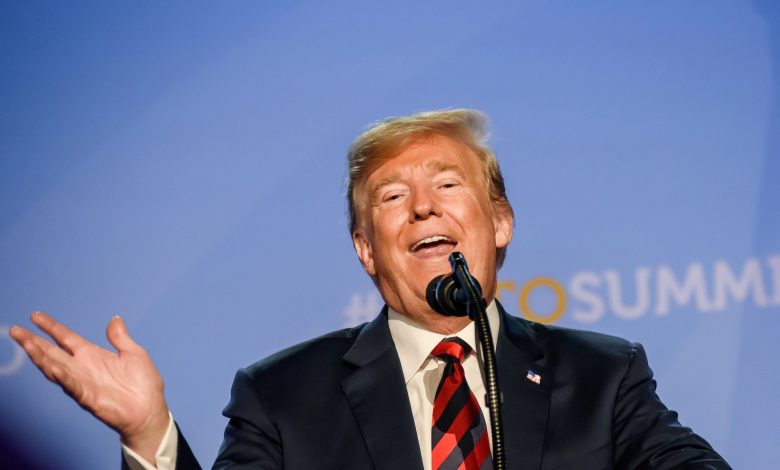
Speaking in Washington on Thursday, Trump strongly defended the project after being asked why taxpayers could now potentially be responsible for nearly $1 billion connected to the ballroom complex under a proposed Republican Homeland Security funding bill.
“Well, they’re not,” Trump insisted.
The president argued that much of the proposed funding would actually cover broader military and security improvements tied to White House grounds rather than the ballroom itself.
“That’s for many other projects having to do with safety in a certain section of the White House grounds. That’s not all for the ballroom,” Trump said.
He repeated earlier claims that the ballroom portion itself would largely be privately financed.
“We’re putting up $400 million to do the ballroom section of the ballroom. We are putting that up privately. I am doing it along with other patriots that love our country.”
Security fears revive stalled ballroom project
The White House ballroom proposal had spent years trapped in legal disputes and public opposition before the recent violence suddenly pushed it back into the center of political discussion.
Following the attempted attack at the Correspondents’ Dinner, several top Republicans began openly arguing the ballroom should now be viewed as a national security necessity rather than a luxury expansion.
Sen. Lindsey Graham became one of the strongest voices backing that argument.
“It’s very difficult to have a bunch of important people in the same place unless it’s really, really secure,” Graham said. “The times in which we live are unusual. I’ve been up here for a while now. I’ve never felt the sense of threat that exists today.”
Senator Lindsey Graham says he’s introducing legislation to spend $400 million on Trump’s White House ballroom:
“The sooner we get the ballroom built, the better it is for the country” pic.twitter.com/fmZwkc0I9m
— Republicans against Trump (@RpsAgainstTrump) April 27, 2026
Sens. Eric Schmitt and Katie Britt also backed legislation that would help finance the project through customs and national park user fees instead of direct congressional appropriations. Their proposal reportedly includes military and Secret Service infrastructure tied directly to the ballroom complex.
Trump himself leaned heavily into the security framing while discussing the project.
“But they want to do certain things militarily with respect to the ballroom. Having nothing to do with us. Or having to do with the safety of the president. So having to do with a lot of things,” he said.
The president then tied the ballroom directly to the recent violence.
“We are going to have a safe ballroom. It’s under construction, it’s ahead of schedule, it’s right on budget. It would be $300-400 million that we’re putting up. And a lot of that money will be going to safety also.”
Trump escalated the rhetoric further moments later.
“This will be the most beautiful ballroom anywhere in the world and it’ll be the safest ballroom, by far, anywhere in the world and you won’t have a fiasco like you did Saturday night two weeks ago.”
Critics, however, immediately accused Trump and his allies of exploiting the attack to rescue a politically unpopular project.
One critic sharply rejected the argument being used to justify the ballroom revival.
“It looks a lot like those around the president are trying to capitalize on this weekend’s scare to sell something that’s of great personal importance to Trump.”
Legal fights and public backlash continue
Even as Republicans rally around the project, major legal obstacles remain.
The National Trust for Historic Preservation sued to stop construction, arguing Trump moved forward without proper congressional approval. While a federal appeals court recently allowed construction activity to continue during the lawsuit, earlier rulings temporarily halted above-ground work.
Pressure on the preservation group reportedly increased after the Correspondents’ Dinner attack, with the Department of Justice allegedly urging the organization to back away from its legal challenge. So far, the trust has refused.
Public opinion has also remained largely negative. Polling from Washington Post-ABC News-Ipsos found only 28 percent of Americans support the development, while 56 percent oppose it. Other polling has shown opposition margins reaching double digits.
Meanwhile, fresh controversy emerged this week after reports alleged toxic debris connected to construction work had been dumped at East Potomac Golf Links. A National Park Service study reportedly found lead, pesticides, chromium, PCBs, and petroleum byproducts in soil samples taken from the area.
Despite the growing backlash, Trump appears fully invested in the ballroom becoming part of his presidential legacy. Reports indicate he regularly follows construction progress and personally discusses updates with project managers late into the evening.
What started as a violent security scare has now evolved into something much broader — a battle over money, politics, security, and symbolism. And as criticism continues growing from Washington to Texas and beyond, the ballroom debate is no longer just about architecture. It has become another front in America’s increasingly bitter political divide.