‘Really bad advice’: Texas Sen. Ted Cruz turns up pressure on Trump as backlash over Iran deal spreads across the GOP

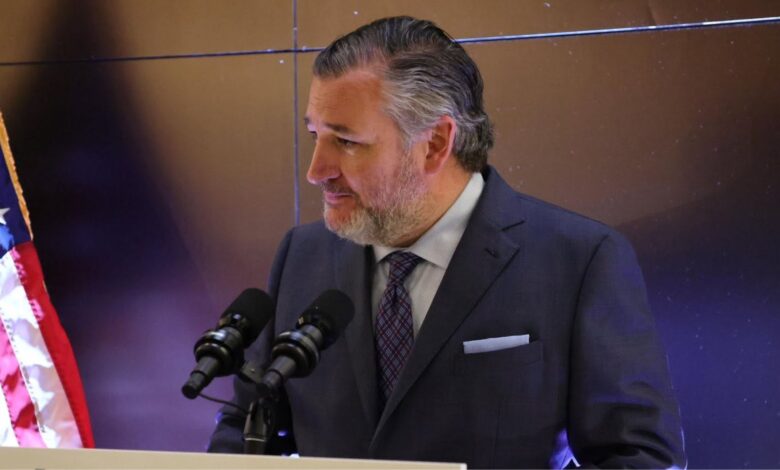
Texas – Texas Republicans are emerging as some of the loudest critics of President Donald Trump’s new agreement with Iran, creating a rare public split between the president and key allies who have long stood firmly in his corner. At the center of that pushback is Texas Sen. Ted Cruz, who warned that the administration may be heading in the wrong direction and suggested Trump is receiving flawed guidance as debate over the deal intensifies across Washington.
The controversy erupted after Trump lashed out at Republican critics who have questioned parts of the U.S.-Iran memorandum of understanding. Returning from the G7 summit, the president took to Truth Social to defend the agreement and attack opponents within his own party.
“These fools, who think I haven’t been tough enough on Iran, when the Stock Market Just Hit A RECORD HIGH, and Oil prices are ‘tumbling’ down, are either jealous, bad people, or stupid,” Trump wrote.
Despite that rebuke, opposition inside the GOP has continued to grow, with Texas lawmakers playing a leading role.
Texas Republicans Lead the Resistance
Cruz has become one of the most vocal Republican skeptics of the agreement. Speaking on Capitol Hill, the Texas senator expressed concern that the administration may be making serious mistakes in its approach to Tehran.
He said he believes Trump is getting “some really bad advice on this deal.”
Much of Cruz’s criticism centers on a reconstruction package reportedly tied to the agreement. While the administration has argued that the funding would come from private investors rather than American taxpayers, critics fear the economic relief could ultimately strengthen the Iranian regime.
“History demonstrates that giving billions of dollars to theocratic lunatics who want to murder us is an exceptionally bad idea,” Cruz said. “If we give billions of dollars to Iran, that money will be used to murder Americans, and so I don’t believe we should do that,” he added.
The Texas senator also rejected the idea of helping rebuild Iran after decades of conflict and terrorism accusations. “The idea that we would have, effectively, a Marshall Plan for Iran, and come in and rebuild Iran after they’ve been the leading state sponsor of terrorism for 47 years, they’ve murdered nearly 1,000 Americans, I don’t think that makes any sense,” Cruz added.
His comments reflect a broader concern among conservatives who fear sanctions relief and economic investment could give Iran access to resources that might later be directed toward militant groups throughout the Middle East.
Fellow Texas Republican Sen. John Cornyn also voiced concerns. While focusing on the agreement’s regional consequences, Cornyn argued that Israel appears to have been sidelined by provisions calling for a “permanent end to military operations on all fronts, including in Lebanon.” “I would encourage them to continue to take the fight to Hezbollah, because, unfortunately, now Iran is going to have hundreds of millions of dollars to support its terrorist proxies, including Hezbollah,” Cornyn said Thursday. “So, I think that was a mistake.”
Growing Republican Unease
The criticism is not limited to Texas.
Louisiana Sen. Bill Cassidy delivered one of the harshest attacks on the agreement, arguing that it weakens pressure on Iran while rewarding aggressive behavior. “Iran’s nuclear ambitions were not curbed, and they have learned that threatening the Strait of Hormuz works and will undoubtedly leverage it in the future,” Cassidy wrote.
He went even further, declaring, “This is the worst foreign policy blunder in decades.”
Arkansas Sen. Tom Cotton also questioned the wisdom of easing restrictions on Iran’s oil industry. Cotton warned that renewed oil sales could generate massive revenue for Tehran.
According to Cotton, sanctions relief could provide “somewhere between $150 and $200 million per day. So that’s $4.5 billion to $6 billion every single month.”
He argued that such funds would likely be directed toward military programs and groups such as Hamas and Hezbollah rather than domestic needs.
Mississippi Sen. Roger Wicker echoed those concerns, saying, “I am concerned that the memorandum of understanding negotiates away the victories of Operation Epic Fury in ways that are completely out of step with the President’s goals.”
Meanwhile, North Carolina Sen. Thom Tillis questioned whether lawmakers have enough information to evaluate the agreement at all. “If I’m ultimately asked by the administration to judge it on the basis of the 14 points that we know, then it will not be a good assessment,” Tillis said.
Some Republicans Urge Patience
Not every Republican is ready to reject the agreement.
Senate Majority Leader John Thune said senators are still waiting for a full briefing from the administration and suggested that reopening the Strait of Hormuz could provide economic benefits for Americans. However, he acknowledged that several major questions remain unresolved.
South Carolina Sen. Lindsey Graham, who has often taken a hard line on Iran, offered a cautious endorsement after discussions with Trump envoy Steve Witkoff. “After this discussion, it is my opinion that signing the MOU will be beneficial to the United States, in as much as the Strait of Hormuz will begin to open, and the hostilities with Iran will stop,” Graham said. Still, even Graham stressed that larger questions surrounding Iran’s nuclear program remain unanswered.
The backlash has also spread beyond party lines. Democrats including Senate Minority Leader Chuck Schumer and Connecticut Sen. Richard Blumenthal have blasted the agreement, arguing that Iran appears to have gained major concessions.
For now, however, the most notable resistance may be coming from Texas. With both Cruz and Cornyn publicly challenging key elements of the deal, Trump finds himself facing criticism not only from longtime opponents but from influential Republicans in one of the party’s most important states. As Congress prepares for briefings and further debate, the fight over the Iran agreement appears far from over.