Texas GOP declares war on IVF, but Ken Paxton sides with Trump and vows to support protections for families seeking fertility treatment

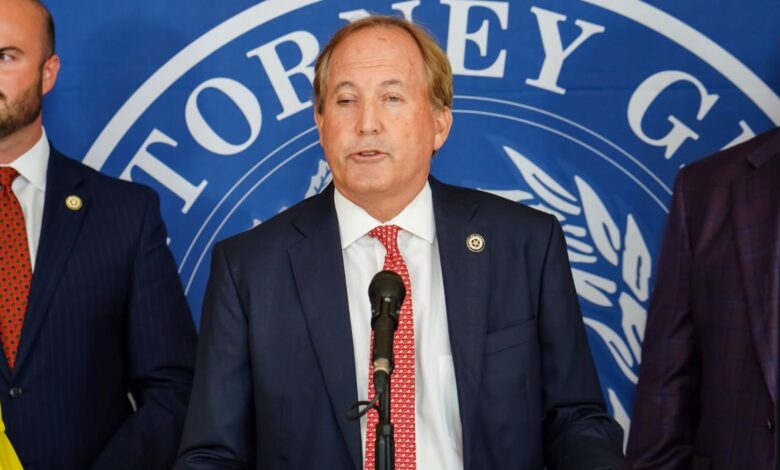
Texas – A growing divide inside the Republican Party is unfolding in Texas after Senate candidate and Attorney General Ken Paxton publicly backed in vitro fertilization, putting himself at odds with his own state party’s newly adopted platform.
The dispute erupted just days after delegates at the Texas Republican convention in Houston approved language calling for stronger opposition to IVF and urging lawmakers to take action against practices they believe threaten embryonic life. While party activists pushed for tighter restrictions, Paxton moved in the opposite direction, aligning himself with President Donald Trump and several other prominent Texas Republicans who have openly defended access to fertility treatments.
In a statement, Paxton left little doubt about where he stands.
“Strong families are the foundation of a strong nation,” Paxton said. “Every child is a blessing, and every family hoping to welcome a child deserves support and compassion. I am a strong supporter of IVF and pro-family policies that help Americans experience the wonders of parenthood.”
The declaration marks one of the clearest breaks between Paxton and the Texas GOP platform, a document adopted by convention delegates that describes IVF as one of several practices lawmakers should address in order to protect unborn life.
A Deepening Republican Divide
The clash highlights a broader conflict that has been developing inside conservative circles since IVF became a major political issue in 2024.
Texas Republican delegates approved platform language calling on lawmakers to “protect fetal life from destructive practices, such as IVF and commercial surrogacy.” The platform also opposes “public funding for procedures that destroy embryonic life, including IVF” and calls for measures designed to prevent “embryo discarding, eugenic practices and commodification of human life.”
Many activists on the religious right argue that life begins at fertilization and therefore believe embryos created during IVF deserve the same protections as unborn children. Because some embryos created during the process are never implanted or are discarded, opponents see the treatment as morally unacceptable.
The Texas GOP also wants lawmakers to require reporting on embryo creation, storage, and disposition while encouraging what it describes as ethical alternatives for infertility treatment.
Yet that position appears increasingly disconnected from many of the party’s most visible elected officials.
Paxton’s endorsement of IVF places him alongside Trump, Gov. Greg Abbott, Sen. Ted Cruz, and Sen. John Cornyn, all of whom have expressed support for protecting fertility treatments.
Trump and Paxton on the Same Side
The issue exploded nationally after a 2024 Alabama Supreme Court ruling concluded that frozen embryos should be treated as children under state law. The decision created immediate uncertainty for fertility clinics, causing some providers to pause treatments and triggering concern among families seeking IVF services.
Republican leaders quickly moved to distance themselves from restrictions on IVF.
Trump was among the most vocal supporters. “I was always for IVF. Right from the beginning, as soon as we heard about it,” he said during the controversy.
Later, while promoting fertility initiatives, Trump added, “In the Trump administration, we want to make it easier for all couples to have babies, raise children, and start the families they’ve always dreamed about.”
Although Trump has not implemented every proposal he discussed during the campaign, his administration has pursued several steps aimed at expanding fertility access, including an executive order seeking policy recommendations and efforts to lower the cost of certain fertility medications.
Paxton is also backing the IVF Protection Act, legislation introduced by Sens. Katie Britt and Ted Cruz. The proposal would strip Medicaid funding from states that ban IVF treatments. His campaign says he plans to cosponsor the bill if elected to the Senate.
Public Opinion Creates Political Pressure
Support for IVF remains widespread among voters, creating a difficult political environment for Republicans who oppose the procedure.
A Pew Research Center survey conducted in 2024 found that 70 percent of Americans viewed IVF positively, while only 8 percent considered access to the treatment a bad thing.
The numbers are similarly challenging for IVF opponents in Texas. A University of Texas/Texas Politics Project poll found that 68 percent of Texans oppose banning IVF, including 65 percent of Republican voters.
That public support has made IVF a politically sensitive topic, especially as Paxton prepares for a competitive Senate race against Democrat James Talarico.
Talarico’s campaign has already criticized Republicans over the state party’s opposition to IVF, hoping to turn the issue into a liability for GOP candidates.
At the same time, Paxton enters the race carrying political baggage of his own. The attorney general was impeached by the Texas House in 2023 over allegations including abuse of public trust, bribery, and obstruction of justice, though he ultimately survived the process. Last year, his former wife, state Sen. Angela Paxton, filed for divorce on “biblical grounds” and declined to endorse his Senate campaign.
Despite those controversies, Paxton continues to enjoy Trump’s backing. Before the Republican runoff, Trump praised Paxton as “someone who has always been extremely loyal to me and our AMAZING MAGA MOVEMENT.”
Now, the IVF debate has placed Paxton in an unusual position. While many conservative activists in Texas want stronger restrictions, the state’s leading Republican Senate candidate is siding with Trump and publicly defending fertility treatments. As the 2026 election approaches, that disagreement is becoming one of the clearest examples of the growing tension between Republican grassroots activists and the party’s national leadership.
For now, one thing is clear: on IVF, the battle lines inside Texas Republican politics are no longer hidden.