Trump birthright citizenship case shaken after key Supreme Court exchange sparks controversy

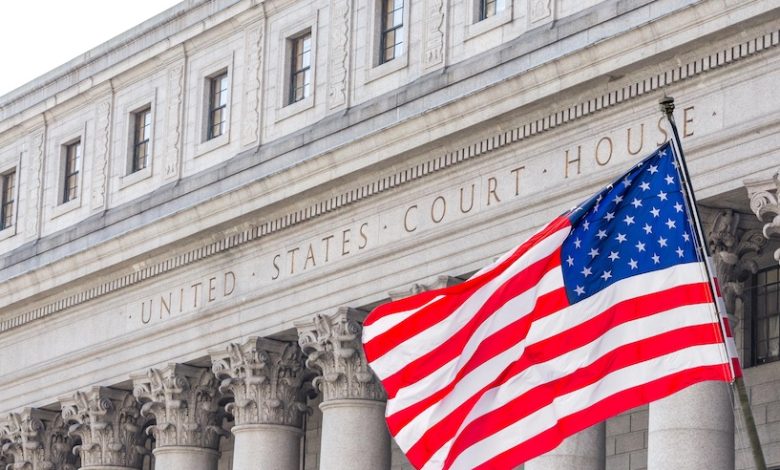
Texas – Trump birthright citizenship case shaken after key Supreme Court exchange sparks controversy, as a tense moment inside the nation’s highest court exposed uncertainty in the administration’s legal argument while political fallout continues to grow far beyond the courtroom.
At the center of the dispute is an executive order signed by President Donald Trump at the start of his second term, aiming to reinterpret the 14th Amendment and deny automatic citizenship to children born in the United States if their parents are undocumented or only temporarily in the country. The policy has triggered a major legal challenge now being reviewed by the Supreme Court, alongside rising concern among voters and legal experts.
Supreme Court exchange exposes cracks in argument
During nearly two hours of oral arguments, a pointed exchange between Justice Neil Gorsuch and Solicitor General D. John Sauer became one of the most closely watched moments of the hearing. Gorsuch pressed Sauer on a key issue: whether Native Americans qualify as birthright citizens under the Constitution.
Sauer initially appeared uncertain. “I think so. I mean, obviously they’ve been granted citizenship by statute,” he said, referencing the Indian Citizenship Act of 1924. But Gorsuch pushed him to ignore the statute and focus strictly on constitutional meaning. “Do you think they’re birthright citizens?” Gorsuch asked. Sauer’s response shifted. “No, I think the clear understanding that everybody agrees in the congressional debates is that the children of tribal Indians are not birthright citizens.”
Moments later, the discussion took another turn when Gorsuch reframed the issue, asking whether Native Americans are “lawfully domiciled” in the United States. Sauer again adjusted his position. “I think so, on our test. They’re lawfully domiciled here. I have to think that through, but that’s my reaction,” he said. Gorsuch responded simply, “I’ll take the yes.”
The exchange highlighted a deeper tension within the administration’s argument. The 14th Amendment guarantees citizenship to those born in the United States who are “subject to the jurisdiction thereof,” but the administration argues that this phrase excludes certain groups, including children of undocumented immigrants.
Historically, that same language once excluded Native Americans, who were treated as members of sovereign tribal nations after the amendment was ratified in 1866. It was not until 1924, when Congress passed the Indian Citizenship Act, that Native Americans were broadly recognized as U.S. citizens while still maintaining tribal identity.
Legal scholars say the difficulty in answering Gorsuch’s question revealed a potential weakness. If Native Americans—who are both sovereign and present within the country—fall within constitutional protections, it may complicate efforts to narrow citizenship rights for other groups.
The reaction was swift. Rep. Teresa Leger Fernández criticized the performance, writing, “Imagine going before the Supreme Court to attack birthright citizenship and being unable to say Native Americans are American citizens.” She added, “This was never about the Constitution. It’s about exclusion.”
Political backlash grows beyond the courtroom
While the legal battle unfolds in Washington, the impact of the policy is already being felt on the ground, particularly in South Texas, where many Latino voters are rethinking their political alignment.
For many families, the issue is not theoretical. Birthright citizenship is seen as a “fundamental tenet of the American dream,” tied closely to identity, history, and opportunity. The idea of limiting it has sparked concern and emotional responses across communities that once supported Trump.
Samuel Garza, a longtime voter from McAllen, described the policy as deeply troubling. “It is saddening,” he said, warning that overturning long-standing protections “would hurt so many families who come here to contribute and make lives here.” He added bluntly, “I don’t think I can vote Republican anymore.”
Others have voiced similar views. Santiago Manrrique, a retired police officer, pointed to the Constitution itself. “If you are born in the United States, you are a citizen — it’s pretty clear in the 14th Amendment,” he said.
These personal accounts reflect a broader shift. Polling shows that while many Republican voters support restricting birthright citizenship, a majority of Latino Republicans disagree. Trump’s approval among Latino voters has also declined, with growing disapproval tied to immigration policies.
At the same time, the birthright citizenship debate is part of a wider pattern of stricter immigration measures. Changes to licensing, education access, and public services have created what some advocates describe as a climate of uncertainty.
“These all represent a broader and more coordinated shift … to create a pipeline of exclusion that stretches from limiting access to K-12 education, all the way into participation in the workforce and basic mobility through the state,” said Corinne Kentor.
Supporters of the policies argue they are necessary. “Benefits, licenses, and taxpayer-funded services should not be used to incentivize unlawful presence at the expense of hardworking Texans,” said Andrew Mahaleris.
A decision with far-reaching consequences
As the Supreme Court considers the case, the outcome could reshape not only immigration policy but also the meaning of citizenship itself. Early signals suggest skepticism from multiple justices, though no final ruling has been issued.
Beyond the courtroom, the political impact is already unfolding. The issue has become a defining moment for many voters, particularly in regions where support once seemed firm.
The decision, when it comes, will carry weight far beyond a single policy. It could redefine how the Constitution applies to people whose legal status has evolved over time—and determine whether long-standing interpretations of citizenship remain intact.
For now, the controversy continues to grow, fueled by both legal uncertainty and deeply personal stakes, as the nation waits for a ruling that could change the foundation of who is considered American.