President Trump argues Iran war accidentally strengthened Texas oil dominance after global buyers rushed to replace lost Strait of Hormuz supplies

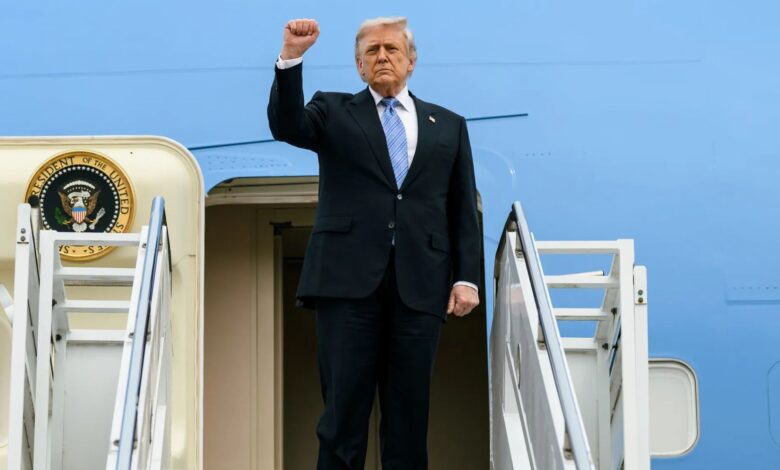
Texas – The war involving Iran and the collapse of shipping through the Strait of Hormuz are rapidly reshaping global energy markets, and President Donald Trump now argues the crisis may end up strengthening America’s oil industry — especially in Texas — long after the fighting stops.
Speaking Monday during a White House Maternal Healthcare Event, Trump described the disruption in Middle Eastern oil traffic as an unexpected opening for U.S. energy producers. According to him, countries that once relied heavily on Gulf crude are increasingly turning toward American suppliers in Texas, Louisiana, Alaska, and along the Gulf Coast as they scramble to stabilize fuel imports during the conflict.
“When people heard about losing Hormuz, they said, ‘Oh, this is… It’s genius. They’re finding other locations,’” Trump said. “Some of those people are gonna continue to go to Texas. They like it better. They said it’s an extra 45 minutes. They like it better. And it’s sort of amazing, you know. It found its way.”
Trump framed the shift as proof that the United States has become central to the global energy system at a moment when instability in the Middle East has shaken traditional supply routes. He argued that many predictions surrounding catastrophic oil spikes had failed to materialize despite the scale of the disruption. “A lot of people thought oil would go to $250, $300. It’s not. I mean, today it’s at less than 100. Think of that,” Trump said.
He also predicted that energy prices could fall sharply once the conflict finally ends. “As soon as this is over with Iran, as soon as it’s over, you’re gonna see gasoline and oil drop like a rock.”
Texas Oil Industry Sees Massive Surge
There is evidence supporting at least part of Trump’s argument. Since the fighting intensified and shipping routes through Hormuz became heavily disrupted, American crude exports have surged. Oil producers across Texas, Louisiana, and offshore Gulf facilities have expanded shipments as foreign buyers search urgently for replacements to Persian Gulf supply.
Export terminals across the Gulf Coast have reportedly been operating near maximum capacity while U.S. oil production reached record highs earlier this year. Analysts have noted that the conflict accelerated an energy trend that had already been developing for years: countries attempting to reduce dependence on a single vulnerable region.
Trump described that larger transition by saying America was becoming “a big filling station” for the world. He also pointed toward expanding port infrastructure and new docking capacity designed to handle growing export demand.
The broader global shift is real. Several countries that previously depended heavily on Middle Eastern crude have signed longer-term agreements with American suppliers during the crisis. Saudi Arabia and the United Arab Emirates have also tried redirecting some oil through bypass pipelines instead of relying entirely on Hormuz shipping lanes.
Energy experts have long noted that supply disruptions often permanently alter buying patterns. Once countries establish new supply chains, they do not always fully return to old ones even after a crisis fades.
The Crisis Is Far Bigger Than America Alone Can Solve
Still, the global situation remains far more severe than Trump’s optimistic framing suggests.
Before the war, roughly 20 million barrels of petroleum products passed through the Strait of Hormuz every day. That represented about one-fifth of global petroleum consumption and approximately a quarter of all seaborne oil trade worldwide.
By March 2026, however, that flow reportedly collapsed to just over 2 million barrels per day. The reduction created one of the largest energy disruptions seen in decades. Analysts estimate total lost supply exceeded 13 million barrels daily, with hundreds of millions of barrels disappearing from global markets in March alone.
Even the emergency bypass systems available in Saudi Arabia and the UAE cannot fully compensate. Combined, those alternate pipelines can reroute only a fraction of the lost volume, leaving enormous shortages that current infrastructure simply cannot fully replace.
American production, while historically strong, also faces hard limits. U.S. crude exports reached around 4 million barrels per day in 2025. Even if every available American export barrel were redirected toward displaced buyers, it would still replace less than one-third of the missing Hormuz supply.
Trump’s claim that switching from Gulf oil to Texas oil amounts to “an extra 45 minutes” has also drawn skepticism because global shipping logistics are far more complicated.
For Asian countries like China, India, Japan, and South Korea — which previously received most of Hormuz’s exports — shipping crude from Texas requires significantly longer transit times. Tankers leaving the U.S. Gulf Coast may take roughly 25 days to reach Asia compared to around 10 days from the Persian Gulf.
There are also technical complications involving refinery designs, contract systems, and crude quality differences that make sudden supply changes difficult.
Several countries are already feeling intense pressure. The Philippines declared a national energy emergency earlier this year because of its dependence on Middle Eastern oil. Japan has begun drawing down strategic reserves, while India faces growing concern over how long emergency supplies could last if disruptions continue.
Even so, the crisis has undeniably boosted the strategic importance of Texas oil producers in the eyes of many global buyers. What began as a geopolitical shock in the Middle East is increasingly reshaping long-term energy relationships around the world.
And while the war has created enormous instability, Trump believes one outcome may already be clear: America’s role in global energy markets has become far larger than it was before the Strait of Hormuz crisis erupted.