Federal court sides partly with Gov. Abbott in high-stakes legal clash involving CAIR donor records, foreign funding, and terrorism allegations

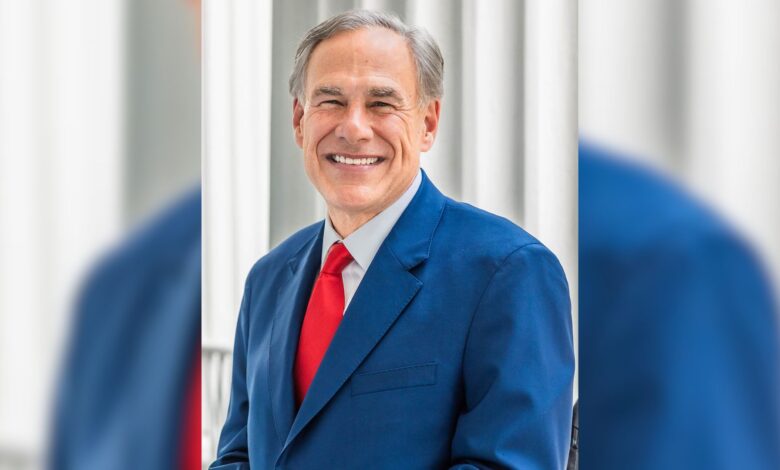
Texas – A federal judge has delivered a partial legal victory to Texas Gov. Greg Abbott in his escalating battle against the Council on American-Islamic Relations, or CAIR, ordering the organization to turn over portions of donor information and foreign travel records tied to several of its top figures.
The ruling marks another dramatic step in a growing legal and political war that has already fueled fierce debate across Texas over terrorism allegations, religious discrimination claims, free speech, and state power.
Judge Alan Albright issued the decision last week after reviewing competing motions filed by Abbott and the CAIR Foundation. The governor had pushed aggressively to force the organization to hand over broad categories of donor records, communications, funding information, and overseas travel documents. CAIR fought back, seeking a protective order to block much of the request.
Instead, the judge split the difference.
Albright granted portions of Abbott’s requests while rejecting others, narrowing the scope but still requiring CAIR to provide significant records tied to foreign funding and international activity.
The lawsuit itself began after Abbott designated CAIR a Foreign Terrorist Organization last November, a move the organization immediately challenged in court. Abbott has since intensified pressure on the group, publicly calling for investigations into CAIR and affiliated organizations.
CAIR has repeatedly denied any connection to terrorism and says Abbott’s actions are politically motivated attacks against Muslim groups.
Following the ruling, Abbott quickly claimed momentum.
“Progress in my legal fight against CAIR. I declared CAIR a Foreign Terrorist Organization. They sued to block it. I demanded CAIR give us its donor list, donee list, and details for Nihad Awad’s travel to 9 countries hosting Islamic terror. A federal court granted my request.”
Judge narrows Abbott’s demands
Despite Abbott’s celebration, the court order was more limited than the governor suggested publicly.
CAIR National Deputy Director Edward Mitchell accused Abbott of exaggerating the outcome.
Abbott “falsely claimed the judge granted his request for CAIR’s entire ‘donor list’ and ‘donee list,'” Mitchell said, arguing the ruling only involved certain foreign donations made between 2021 and 2024 above specific thresholds.
Still, the order gives Abbott access to records CAIR strongly opposed turning over.
One section of the ruling addressed Abbott’s request for donor identities tied to CAIR National and the Washington Trust Foundation. Abbott originally sought information covering ten years and donations of $5,000 or more. Judge Albright narrowed that request, ordering disclosure only for foreign donors and only over a four-year period.
Another request involved identifying donors who contributed $1,000 or more to CAIR National, CAIR Action Network, and the Washington Trust Foundation. Again, the judge reduced the scope, requiring records only for donors giving $2,500 or more during the same time frame.
The judge also ordered CAIR to produce documents tied to foreign funding sources connected to the organization and its affiliates.
Perhaps the most sensitive part of the ruling involves travel records tied to CAIR cofounder and executive director Nihad Awad.
Abbott requested documents concerning international travel involving Awad, Mitchell, and CAIR spokesman Ibrahim Hooper. The judge narrowed that demand but still ordered records related to Awad’s trips to Egypt, Gaza, Iran, Jordan, Lebanon, Qatar, Saudi Arabia, Turkey, and the United Arab Emirates between October 2019 and September 2023.
The court specifically ordered CAIR to provide details regarding Awad’s itineraries, meetings, and identities of individuals he met with if those meetings involved funding or operations connected to the CAIR Foundation, the Washington Trust Foundation, Hamas, or the Muslim Brotherhood.
The judge also partially sided with Abbott regarding requests involving documents tied to terrorism or illegal activity. Rather than forcing CAIR to immediately hand over everything requested, Albright instructed the organization to provide “a term-by-term hit count for the terms and timeframes” while encouraging both sides to narrow search parameters.
A broader political and cultural fight
The case has become far larger than a standard discovery dispute.
Abbott has increasingly positioned himself as one of the country’s most aggressive Republican officials targeting organizations he claims are connected to extremism. Attorney General Ken Paxton also filed similar requests in court, though Abbott has publicly criticized Paxton at times for not moving aggressively enough against CAIR.
The judge issued comparable rulings tied to Paxton’s requests and ordered CAIR to begin responding by May 8 and May 15.
Meanwhile, CAIR argues the legal battle reflects a much broader anti-Muslim political campaign unfolding in Texas.
The organization has pointed to a report from the Center for the Study of Organized Hate claiming anti-Muslim rhetoric online has created what it described as an “online atmosphere of hysteria.”
According to the report, nearly 300,000 social media posts tied to “Islamophobic content in Texas” circulated online, often portraying Muslim communities as part of a “Muslim invasion.”
The report also accused social media influencers, podcasters, and right-wing activists of spreading fear by using “Crusade” language and linking ordinary Muslim civic activity to terrorism.
CAIR itself has responded aggressively as well, labeling the U.S. House Sharia Free Caucus led by Texas Republicans Chip Roy and Keith Self an “anti-Muslim hate group.” It has also designated several Republican lawmakers as “anti-Muslim Extremists.”
With both sides digging in, the legal fight now appears likely to continue deep into the future, carrying consequences not only for CAIR and Abbott, but for broader national debates surrounding religion, security, political speech, and the power of state governments.