“He’ll never get the endorsement”: Texans mock Cornyn as he tries to win Trump’s favor with controversial proposal

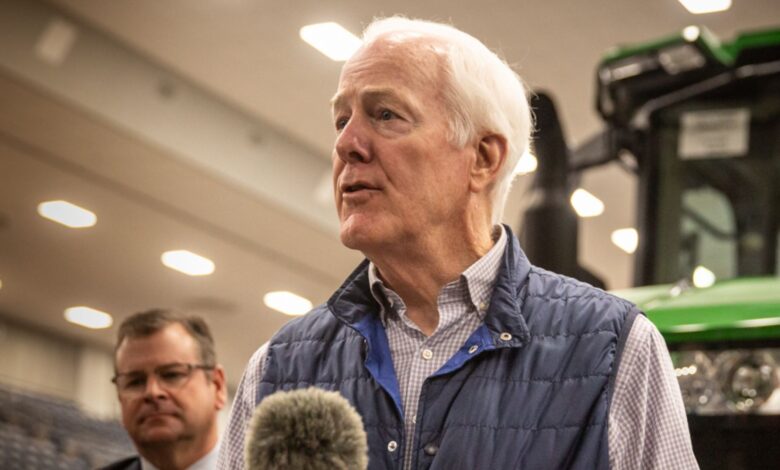
Texas – Texas Senator John Cornyn’s latest proposal was meant to celebrate Donald Trump while promoting a massive infrastructure upgrade stretching across several states. Instead, it triggered mockery, frustration, and political backlash from many Texans who accused the longtime Republican senator of trying too hard to win favor with the president ahead of a crucial Senate showdown.
The controversy erupted after Cornyn introduced the I-47 Future Interstate Act, legislation that would redesignate US Highway 287 as Interstate 47 and permanently attach Trump’s name to the roadway as “Trump Interstate.”
The highway itself is enormous, stretching more than 1,700 miles from Texas through Oklahoma, Colorado, Wyoming, and Montana. According to Cornyn’s office, US-287 is the second-longest three-digit highway in the country.
But while the bill was framed publicly as both an infrastructure and economic development proposal, many Texans immediately viewed it through a political lens.
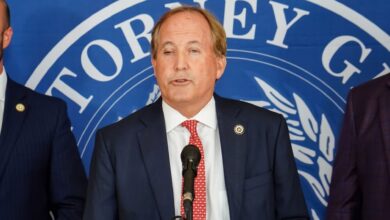
Cornyn is currently fighting for survival in a heated Republican Senate primary runoff against Texas Attorney General Ken Paxton, a race where loyalty to Trump has become one of the central issues.
That context instantly shaped how voters reacted.
Highway Proposal Quickly Becomes Political Flashpoint
Cornyn defended the proposal by tying it directly to Trump’s political identity and popularity in Texas.
“Texas is Trump Country, and this bill cements that legacy by designating nearly 1,800 miles of open road from Texas’ Gulf Coast to the edge of the U.S.-Canadian border as I-47 to forever be remembered as Trump Interstate,” Cornyn said after introducing the legislation.
The proposal would also upgrade Highway 287 into a full interstate corridor, something transportation officials say could produce major economic benefits.
According to a 2025 Texas Department of Transportation report, the project could cost roughly $24.52 billion but potentially generate an estimated $39.6 billion in economic return while creating more than 50,000 jobs.
Cornyn’s office additionally argued the project could save more than $5 billion in travel costs through improved transportation efficiency.
Even many critics acknowledged that the highway itself badly needs upgrades.
“The name is [expletive], but 287 needs the work,” one Texas resident admitted online as reactions poured in.
Still, for large numbers of voters, the transportation benefits quickly became secondary to the politics surrounding the name itself.
Texans Accuse Cornyn of Chasing Trump
The backlash was immediate and often brutal.
Many Texans openly argued that Cornyn’s real goal was not infrastructure reform but political survival.
The Republican senator has spent years trying to balance establishment Republican politics with Trump’s influence over the party base. But as Paxton continues presenting himself as the more aggressive Trump-aligned candidate, Cornyn has increasingly faced pressure from conservatives who view him as insufficiently loyal to the president.
That dynamic fueled widespread suspicion online that the “Trump Interstate” proposal was designed mainly to attract Trump’s endorsement.
Some voters responded by saying the strategy was pushing them toward Democratic Senate candidate James Talarico instead.
“Makes me want to vote for Talarico even more now. Supporting the Trump-Epstein Class is so wrong on so many levels,” one voter wrote.
Others echoed the same frustration.
One person responded by saying they would “donate to James Talarico in honor of this.”
The reactions reflected a growing divide among Texans exhausted by what they see as constant political loyalty battles centered around Trump.
One frustrated voter criticized both major Republican candidates in the Senate race.
“Paxton is straight up evil, but Cornyn votes straight Trump no matter what. They both have plenty of name recognition, too. I think it will be super close between those two, but we really just need more people to come out to vote for Talarico.”
Some Texans Believe the Plan Will Fail Anyway
Not everyone criticizing Cornyn believed the proposal would even accomplish its political purpose.
Some voters argued Trump simply does not trust or personally like Cornyn enough to endorse him no matter how aggressively he embraces Trump branding.
“He’ll never get the endorsement because Trump doesn’t like him,” one person wrote. “The only time he’s seen in Texas with his hat on is when there’s an election. Otherwise, he lives in DC. He does nothing for Texans.”
That criticism highlights a problem Cornyn has struggled with for years: convincing hardline Trump supporters that he is fully aligned with the movement rather than simply adapting politically when necessary.
Paxton has repeatedly tried to exploit that weakness by portraying Cornyn as part of the Republican establishment rather than a true MAGA ally.
The highway proposal may therefore become less about transportation policy and more about proving loyalty inside the Republican primary battle.
Trump Naming Efforts Continue Expanding Nationwide
The Interstate 47 proposal is only the latest in a growing series of efforts to attach Trump’s name to public buildings, roads, and institutions around the country.
In recent months, several major facilities have either been renamed after Trump or proposed for renaming.
The John F. Kennedy Center for the Performing Arts added Trump’s name in late 2025 after the administration reshaped the board with allies.
A stretch of Southern Boulevard near Mar-a-Lago in Florida was renamed President Donald J. Trump Boulevard.
Florida officials also approved renaming Palm Beach International Airport after Trump earlier this year.
Meanwhile, the Trump administration even added Trump’s name to the United States Institute of Peace building in Washington.
The Texas interstate proposal therefore fits into a much broader national effort by Trump allies to permanently tie his name to major public landmarks.
Bigger Stakes Than a Highway Name
What makes the situation politically explosive is the timing.
Cornyn is no longer simply defending his Senate seat against Democrats. He is fighting for his future inside a Republican Party increasingly shaped almost entirely around Trump loyalty.
Every major political move is now being judged through that lens.
For supporters, Interstate 47 represents economic development, infrastructure modernization, and recognition of Trump’s political influence.
For critics, it looks like another example of Republicans turning public projects into personality tributes designed to impress one man.
And for Democrats like Talarico, the backlash may present an opportunity to channel frustration from voters tired of political branding battles overshadowing everyday concerns.
Whether the proposal succeeds legislatively remains unclear.
But politically, Cornyn’s attempt to honor Trump has already succeeded in doing one thing: turning a highway bill into one of the loudest political fights currently unfolding in Texas.