Birthright citizenship battle reaches boiling point as poll shows Americans overwhelmingly oppose Trump-backed effort to rewrite constitutional protections

Texas – A growing number of Latino voters in South Texas are turning away from President Donald Trump following his executive order targeting birthright citizenship, a move that has triggered sharp backlash, political anxiety, and personal reflection in communities that once strongly backed him. What began as a legal and constitutional fight has now become something much deeper for many families — a debate about identity, belonging, and who gets to call themselves American.
The controversy centers around Trump’s January 2025 executive order attempting to deny automatic citizenship to children born in the United States unless at least one parent is already a citizen or permanent legal resident. The policy immediately sparked lawsuits and ignited a national political firestorm, especially in Latino communities where many families have direct ties to immigration stories stretching back generations.
For many voters in South Texas, birthright citizenship is viewed as more than just a legal principle. It is seen as a “fundamental tenet of the American dream,” something woven directly into the nation’s identity. That emotional connection is now colliding with one of the biggest constitutional battles the country has faced in years.
Now, new polling suggests most Americans are not siding with Trump on the issue.
A new Reuters/Ipsos survey found that 64 percent of U.S. adults believe children born in the country should automatically receive citizenship under the 14th Amendment. Only 32 percent said they oppose maintaining birthright citizenship protections.
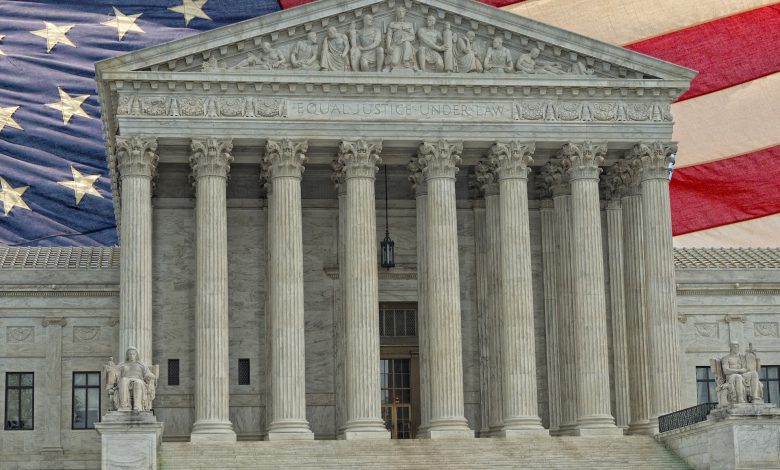
The findings arrive just weeks after the Supreme Court of the United States heard oral arguments in the case challenging Trump’s executive order. A ruling is expected before the court’s term ends in late June, setting up what could become one of the defining constitutional decisions of Trump’s second presidency.
Public opinion sharply divided along party lines
While a majority of Americans overall support birthright citizenship, the issue has become deeply partisan.
According to the Reuters/Ipsos poll, 90 percent of Democrats want the policy to remain unchanged. Among independents, 66 percent support keeping birthright citizenship intact. Republicans, however, remain sharply divided, with 62 percent backing Trump’s effort to end the practice and 36 percent opposing it.
The divide extends across racial groups as well, though support for birthright citizenship remains dominant overall. Reuters/Ipsos found that 74 percent of Black and Hispanic respondents support preserving automatic citizenship protections for babies born in the United States. Among white respondents, support was lower but still represented a majority at 58 percent.
Critics of Trump’s order argue the Constitution leaves little room for reinterpretation. Many legal scholars have said ending birthright citizenship would likely require a constitutional amendment rather than unilateral executive action.
Trump, however, insists the 14th Amendment has been misunderstood for decades. “But the Fourteenth Amendment has never been interpreted to extend citizenship universally to everyone born within the United States,” Trump wrote in the executive order. “The Fourteenth Amendment has always excluded from birthright citizenship persons who were born in the United States but not ‘subject to the jurisdiction thereof,’” he added.
Latino backlash grows in Texas
The legal fight is already reshaping politics in key regions like the Rio Grande Valley, where Latino Republicans who once supported Trump are increasingly expressing concern.
Several South Texas voters interviewed in recent weeks described the policy as a personal breaking point. Some longtime Republican voters said they feel the administration is challenging protections that helped define their own family histories.
Samuel Garza, a 62-year-old voter, said the proposal “would hurt so many families who come here to contribute and make lives here.” He added bluntly, “I don’t think I can vote Republican anymore.”
Others remain conservative politically but disagree strongly with Trump’s citizenship push. Santiago Manrrique, a retired police officer, argued the constitutional language is already clear. “If you are born in the United States, you are a citizen — it’s pretty clear in the 14th Amendment,” he said.
That growing frustration appears to be reflected in polling as well. Trump’s unfavorable rating among Latino voters has climbed to 48 percent, while 55 percent disapprove of his handling of immigration issues.
Supreme Court faces broader culture war cases
The birthright citizenship case is only one of several explosive issues currently before the Supreme Court. The Reuters/Ipsos poll also examined public opinion on transgender athletes, voting rules, and racial representation in congressional maps.
Roughly 67 percent of respondents supported restrictions on transgender girls and women competing in female sports. Meanwhile, 65 percent backed counting mail-in ballots postmarked by Election Day even if they arrive later.
The court is also weighing a challenge to Louisiana congressional districts designed to increase Black voter representation, another case tied to race and constitutional interpretation.
The outcome of these cases could reshape not only public policy but also the political landscape heading into the November midterm elections.
For now, though, the birthright citizenship fight remains at the center of the storm. What began as a hardline immigration proposal has evolved into a national argument over constitutional rights, political identity, and the meaning of citizenship itself.
And as the Supreme Court prepares its ruling, millions of Americans are watching closely — not just to see what the law says, but to see what kind of country the United States wants to become.