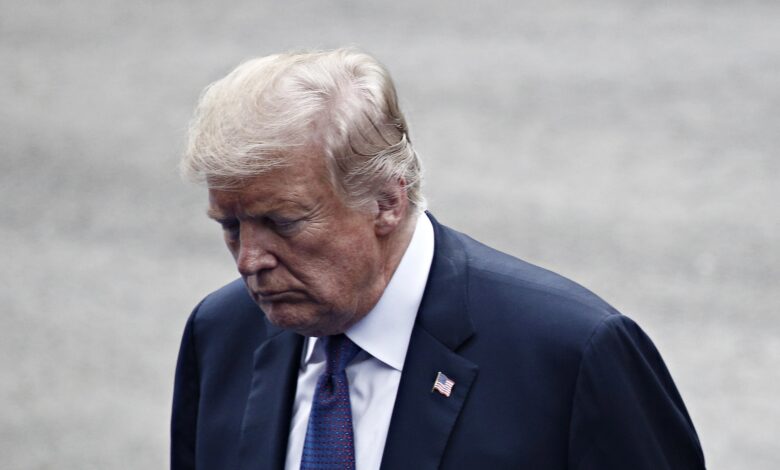
Trump’s approval slides again as younger voters, independents and Latinos turn away while Democrats gain confidence for 2026

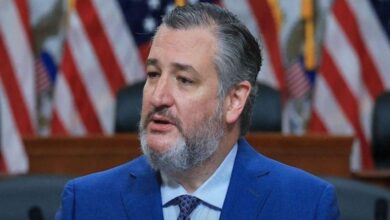
Texas – Just days after a prominent Texas Republican publicly warned that Donald Trump could be steering his party toward serious trouble in the midterm elections, new polling numbers are adding to those concerns.
Texas Sen. John Cornyn, who recently lost his Republican primary to Trump-backed Attorney General Ken Paxton, predicted that the president’s political decisions could ultimately hurt Republicans nationwide. Cornyn even warned that Trump was setting himself up for a midterm “disaster,” arguing that some of the president’s actions were creating unnecessary risks for the GOP ahead of the 2026 elections.
Now, fresh polling suggests Republicans may have another reason to worry.
A new NBC News survey released on Trump’s 80th birthday found the president’s approval rating has fallen to its lowest level of his second term, continuing a downward trend that has emerged over the past year. The numbers arrive at a critical moment as both parties begin preparing for what is expected to be an intense battle for control of Congress.
According to the poll, Trump currently holds a 42 percent approval rating among registered voters, while 57 percent disapprove of his performance. Among all adults surveyed, the picture was even more challenging for the president. Just 39 percent approved of the job he is doing, compared to 58 percent who disapproved.
The survey was conducted between May 29 and June 7 and included 2,400 registered voters. Researchers noted that Trump’s standing has steadily weakened compared to previous NBC surveys. He registered 47 percent approval in March 2025, fell to 43 percent last October, and reached 44 percent in March before slipping again in the latest poll.
Trouble with key voting groups
Perhaps most concerning for Republicans is where the erosion appears to be occurring.
The NBC survey found particularly weak support among younger Americans. Voters between the ages of 18 and 29 gave Trump just 21 percent approval, while 77 percent disapproved of his performance.
Latino voters also showed substantial opposition. Only 34 percent approved of Trump, while nearly two-thirds, 64 percent, expressed disapproval.
Those numbers could become especially important in competitive House and Senate races where turnout among younger and Latino voters often plays a major role.
Independent voters, who frequently decide close elections, have also become increasingly skeptical. Earlier polling from YouGov and The Economist found Trump’s approval among independents had fallen to its lowest level since he returned to office.
The White House has previously pushed back against concerns about declining poll numbers.
Responding to questions about Trump’s standing, spokesperson Davis Ingle told Newsweek, “The ultimate poll was November 5, 2024, when nearly 80 million Americans overwhelmingly elected President Trump to deliver on his popular and commonsense agenda.”
Supporters of the president continue to argue that election results matter more than individual surveys and note that Trump successfully returned to the White House despite skepticism from many political analysts.
Economic concerns weigh on approval
The president’s declining numbers appear closely tied to growing concerns about the economy.
Several recent surveys suggest voters have become less satisfied with Trump’s handling of economic issues, traditionally one of his strongest political assets.
A recent YouGov/The Economist poll found that only 29 percent of Americans strongly or somewhat approved of Trump’s management of the economy. Meanwhile, 63 percent expressed disapproval.
Another YouGov/The Economist survey conducted in early June found Trump’s overall approval rating at just 35 percent, with 60 percent disapproving.
An Emerson College Polling survey painted a similar picture. That poll found 39 percent approval and 55 percent disapproval among likely voters.
The economic concerns come alongside continued attention on foreign policy issues, tensions involving Iran, and worries about gasoline prices, all of which have contributed to a difficult political environment.
Democrats see an opportunity
The latest numbers are fueling growing optimism among Democrats, who increasingly believe they have a realistic chance of regaining control of the House in 2026.
Republicans currently hold a narrow majority in the chamber, controlling 217 seats compared to 212 for Democrats. There is also one independent member and five vacant seats.
While most major election forecasting organizations still believe Republicans remain slightly favored overall, the path back to a Democratic majority is becoming easier to imagine.
Forecasts from The Cook Political Report, Sabato’s Crystal Ball, and Inside Elections continue to show Republicans holding more safe districts. However, all three organizations identify enough competitive races to create a viable path for Democrats if the political environment continues moving in their direction.
Recent special elections have added to Democratic confidence. In several contests, Democratic candidates have performed better than expected, encouraging party strategists who believe voter enthusiasm may be shifting.
That does not mean Republicans are headed toward defeat. The GOP still holds structural advantages in many districts and remains competitive across much of the country. Yet declining presidential approval ratings often create challenges for the party in power, particularly during midterm elections.
For now, Trump’s numbers suggest that dissatisfaction among independents, younger voters, and Latino voters is becoming harder to ignore. Combined with growing economic concerns and an energized Democratic Party, the latest polling offers a reminder that the political landscape heading into 2026 remains highly competitive.
And for Republicans already hearing warnings from figures such as John Cornyn, the newest survey may reinforce fears that the coming election cycle could be far more difficult than many expected.