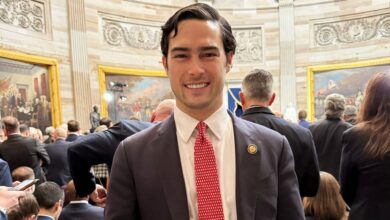
Texas Democrat James Talarico campaigns against billionaire political power while deep-pocketed donors quietly boost his Senate ambitions

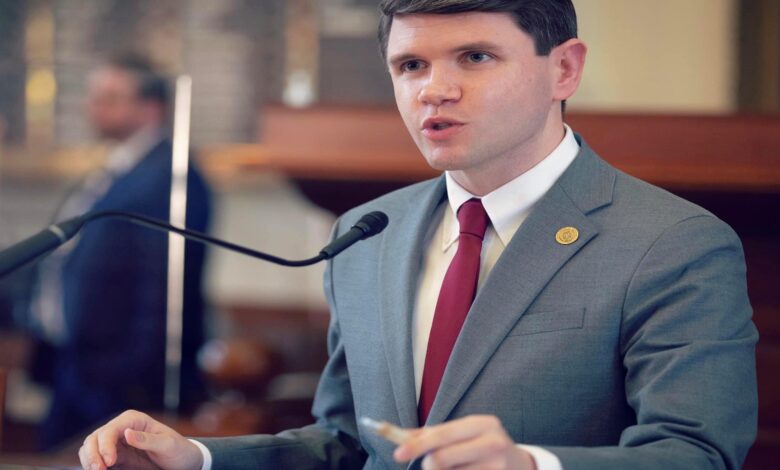
Texas – Texas Democrat James Talarico has built much of his Senate campaign around a sharp attack on wealthy political influence, warning voters that billionaire money is distorting democracy and giving the ultra-rich outsized control over the country’s political system. But as his statewide campaign grows, a different reality is emerging behind the scenes: wealthy donors and deep-pocketed allies are now playing a major role in helping fuel his rise in one of America’s most expensive political battlegrounds.
The contradiction has become a growing topic of discussion in Texas political circles after new reporting highlighted how a super PAC supporting Talarico has been collecting large donations from powerful contributors across Texas and beyond.
On his campaign website, Talarico makes his message unmistakably clear. “Billionaire mega-donors aren’t just buying yachts and jets — they’re buying power, and they’re using that power to rig our political system,” the site states.
That message has helped define his image as a progressive Democrat trying to separate himself from traditional political machines. Yet while Talarico publicly criticizes the influence of massive political spending, outside organizations supporting his campaign are benefiting from exactly the kind of financial backing he often condemns.
The Super PAC Divide
The issue centers on the difference between a candidate’s official campaign and independent political action committees, commonly known as super PACs. Under federal election law, Senate campaigns are limited in how much money they can directly accept from individuals. Outside groups, however, face far fewer restrictions.
John Moritz, chief political reporter for the Austin American-Statesman, explained that distinction while discussing the race with Texas Standard. “Well, we should differentiate his campaign from the PAC, which by law is separate from his campaign and they’re not allowed to coordinate,” Moritz said. “But the PAC is raising a fair amount of money from very deep-pocketed individuals around Texas and beyond.”
He added that some of the donors backing the PAC are billionaires, while others simply possess enormous financial resources capable of heavily influencing modern campaigns. “Some of them are billionaires, some of them might not be billionaires, but they certainly have tremendous means at their disposal and they are contributing to that PAC and that PAC is basically working to help Talarico,” Moritz explained.
That distinction matters politically because Talarico himself cannot legally direct the super PAC’s actions. Still, critics argue that voters may see little difference between a candidate’s public message and the wealthy outside groups spending millions to support them.
Moritz pointed out that federal candidates can generally only receive around $3,500 from an individual donor per election cycle directly into their campaigns. Super PACs operate differently. “But these PACs and super PACs, on the other hand, are not under those restrictions,” he said. “So donors can be far more generous if they are giving to these other, outside, third organizations.”
A Difficult Political Reality
The situation reflects a larger problem many candidates face, especially in Texas, where statewide races can cost enormous amounts of money because of the state’s huge media markets and sprawling geography.
Talarico has repeatedly supported banning super PACs and corporate PAC money altogether. However, refusing help from outside groups while opponents continue accepting massive financial support could place a candidate at a serious disadvantage.
Moritz noted that while Talarico could publicly reject the PAC’s advertising or distance himself from its spending, he has not taken that step. “He tells us, by law, he can’t coordinate with them,” Moritz said. “I suppose he could disavow their ads, say, ‘oh, no, no. That’s not me. That’s them. I wish they wouldn’t do that.’ But so far, he hasn’t drawn that particular line in the sand.”
Instead, Talarico appears to be walking a careful political line — criticizing the broader system while still benefiting from the realities of modern campaign financing.
That balancing act becomes even more complicated because his Republican rivals, including Sen. John Cornyn and Texas Attorney General Ken Paxton, are also expected to receive major outside financial support from wealthy donors and political organizations.
According to Moritz, many operatives inside the super PAC world openly acknowledge the contradiction but view it as unavoidable. “In fact, the director of the super PAC told me is like, we’re aware of his stance on these super PACs. We’re aware his message. We like most of it. Our donors like most of it, but you can’t go into battle with one hand tied behind your back in modern politics,” Moritz said.
He added that campaigning in Texas requires enormous amounts of money simply to stay competitive across the state’s many costly television and digital advertising markets. “That’s kind of the yin and the yang of this race,” he said.
Digital Spending and the Crockett Challenge
Much of the PAC spending supporting Talarico reportedly went toward helping him during a bruising Democratic primary battle against Dallas Congresswoman Jasmine Crockett.
The race became increasingly expensive as both campaigns fought for attention online and on television. But traditional campaign ads are also changing rapidly.
Moritz noted that much of the spending no longer goes toward classic television commercials alone. Digital advertising now dominates many modern campaigns. “Yes, and a fair amount of these ads are digital ads,” he explained. “They might appear online, but a lot of people watch YouTube on their TV, so it’s hard for an ordinary viewer to differentiate.”
That shift has made political influence campaigns harder for voters to track in real time. Ads appear across streaming platforms, social media feeds, YouTube channels, and mobile devices, often blending into regular entertainment content.
As the Texas Senate race continues, Talarico’s campaign now finds itself facing a difficult political question that extends far beyond one candidate: can someone truly fight the influence of billionaire money while still relying on a system powered by it? For now, that contradiction is becoming one of the defining tensions shaping his campaign.