Texas Rep. Wesley Hunt defends GOP and dismisses race concerns as “race baiting” while Democrats accuse party of being “at war with Black America”

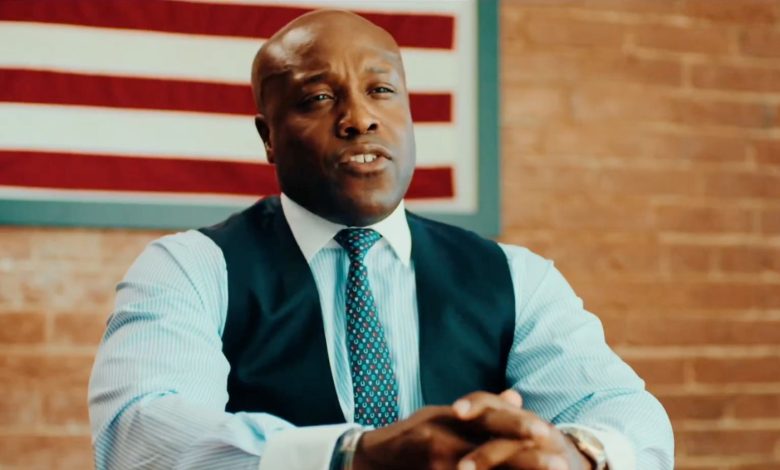
Texas – A heated exchange involving Texas Republican Rep. Wesley Hunt has exploded online after the congressman dismissed concerns about the Republican Party potentially having no Black members left in the House of Representatives after the next congressional term.
The viral moment unfolded outside the Capitol during an interview with MeidasTouch reporter Pablo Manríquez, who asked Hunt about growing discussion surrounding the future of Black Republican representation in Congress.
“There’s been a lot of talk how there won’t be any Black Republican members in the new term. What do you make of that?” Manríquez asked.
Hunt immediately pushed back against the premise of the question.
“I don’t understand how that’s relevant,” Hunt responded. “I’m not here because I’m Black. I am here because I’m qualified — representative for Congressional District 38, and the American people choose who they want to choose. And the one thing I don’t want to get into is this game of race-bait all day, every day.”
The comments quickly spread across social media, triggering intense reactions from both supporters and critics. Hunt later doubled down on X, formerly Twitter, where he framed the exchange as a rejection of identity politics.
“Here’s how you flip a ‘gotcha’ question on race into reality,” Hunt wrote. “Americans don’t want quotas.
They don’t want optics. They want results.”
Here’s how you flip a “gotcha” question on race into reality:
Americans don’t want quotas.
They don’t want optics.They want results.
The kind of representation this country actually demands is simple:
QUALIFIED. https://t.co/hmhbnMbIQ5
— Wesley Hunt (@WesleyHuntTX) April 30, 2026
GOP Faces Possibility of Losing All Black House Members
The controversy comes during a major transition for Republicans in Congress. According to recent reports, all four Black Republicans currently serving in the U.S. House are expected to leave by the end of the current term. That group includes Hunt, Byron Donalds, John James, and Burgess Owens.
Hunt recently lost his Republican Senate primary bid in Texas after falling behind incumbent Sen. John Cornyn and Texas Attorney General Ken Paxton, who advanced to a runoff election.
Donalds and James are both pursuing gubernatorial campaigns in Florida and Michigan, while Owens announced he would not seek reelection after redistricting changes in Utah made his district far more favorable for Democrats.
The departures mark a dramatic shift for a party that had spent years trying to diversify its congressional ranks following major Democratic gains in the 2018 midterms.
Former House Speaker Kevin McCarthy had previously described Republican diversity efforts as critical to expanding the party’s reach. “The more diverse the party is, the more opportunity we have,” McCarthy said in remarks cited by The New York Times.
But critics now argue those efforts are collapsing. “Republicans won’t have any Black members in the next Congress because Republicans have no interest in actually representing Black voters,” Democratic Congressional Campaign Committee spokeswoman Nebeyatt Betre said.
Chris Taylor, a senior adviser to the Congressional Black Caucus PAC, went even further. “It’s going to be really hard for even the most conservative Black Republican to look at this Republican Party and defend it,” Taylor said. “This is a Republican Party that is at war with Black America.”
Hunt Rejects Identity Politics Argument
Hunt, however, insists representation should not be judged through racial numbers.
During the interview, he emphasized that he represents a majority-white district and argued that voters selected him because of his policies and qualifications rather than his race. “I represent a White majority district that President Trump would have won by over 20 points, and I won by over 25 points,” Hunt said.
He also invoked Martin Luther King Jr. while defending his position. “I’m being judged not by the color of my skin but by the content of my character. I don’t care how many Black people are here. I want the most qualified people here.”
The timing of the debate added even more fuel to the controversy because it followed the Supreme Court’s 6-3 ruling in Louisiana v. Callais, a major Voting Rights Act case centered on race and congressional redistricting.
The Court ruled Louisiana’s second majority-Black congressional district was an unconstitutional racial gerrymander, significantly narrowing how the Voting Rights Act can be used in future redistricting disputes.
The decision is already expected to reshape congressional maps across the South, where Republican-led states are preparing additional redistricting efforts that critics fear could reduce Black political representation even further.
Black Voter Gains Have Not Translated Into Representation
The political tension is especially striking because Republicans have recently made modest gains among Black voters nationally.
CNN analyst Harry Enten recently noted that President Donald Trump and Republicans are “holding on to the generational gains they made with Black voters in the 2024 election.” According to Enten, Democrats’ advantage with Black voters has narrowed compared to Trump’s first term, while Trump’s approval rating among Black Americans has risen slightly.
Still, those gains remain relatively small overall and have not produced a larger pipeline of Black Republican officeholders.
Meanwhile, redistricting fights are intensifying nationwide. Republican-led states like Texas are pushing new maps designed to weaken Democratic influence, while Democratic-controlled states such as California and Virginia are responding with maps of their own.
The result is a rapidly changing political landscape where questions about race, representation, and power are becoming increasingly difficult for both parties to avoid.