“We are not ICE”: Houston’s stance triggers $110 million threat from Abbott in escalating immigration policy clash

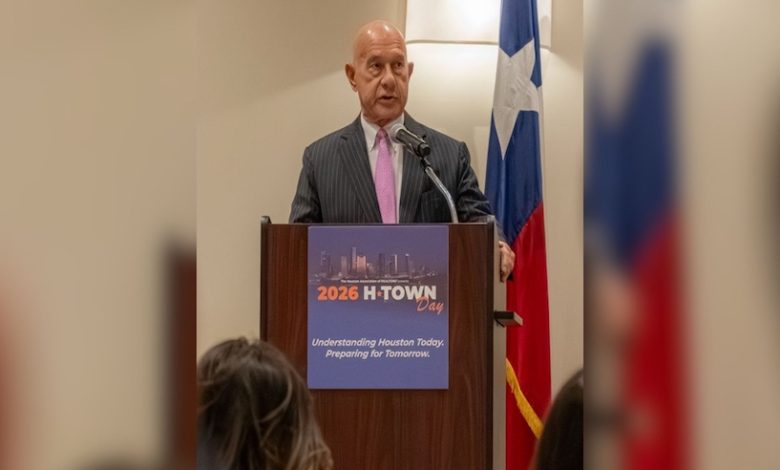
Houston, Texas – A political and financial confrontation is rapidly intensifying in Texas, as Houston finds itself at the center of a growing battle over immigration policy and public safety funding. What began as a local ordinance decision has now turned into a high-stakes clash with statewide consequences, after Governor Greg Abbott threatened to pull $110 million in critical funding from the city.
At the heart of the dispute is Houston’s revised “Prop A” immigration measure, recently approved by Mayor John Whitmire and the City Council. The mayor has defended the move as a continuation of Houston’s long-standing approach to law enforcement, emphasizing that local authorities are not meant to act as federal immigration agents. As he put it clearly, “Houston enforces state and local laws—not federal law—and we are not ICE.”
That position, however, has sparked sharp resistance from state leadership.
Funding Threat Sparks Immediate Alarm
The situation escalated dramatically when Andrew Friedrichs, director of Abbott’s Public Safety Office, issued a formal warning to the city. In the letter, he stated that the newly approved ordinance “imperils all grant agreements” between Houston and the state for Fiscal Year 2026.
The implications outlined were severe and immediate. The letter made it clear: “If PSO elects to terminate those grants, the City would be required to repay to PSO the entire amount on or before the30 th day after PSO terminates.”
This is not a symbolic threat. The $110 million at stake directly funds police departments, fire services, and essential public safety infrastructure across Houston. Losing it would not just tighten budgets—it could disrupt core services that residents rely on every day.
Mayor Whitmire did not downplay the danger. He warned that “The potential loss of state funding poses real challenges for the Houston Police and Fire Departments and will impact public safety services across our city.” His message was clear: the consequences would be felt on the ground, not just in government offices.
Statement from @houmayor John Whitmire:
Last week, I voted for the revised “Prop A” Ordinance on Immigration believing it affirmed our original policy: Houston enforces state and local law-not federal law, and we are not ICE. However, Governor Abbott disagrees.
Read full… pic.twitter.com/ahbkCF47sb
— City of Houston (@HoustonTX) April 13, 2026
Broader Impact Raises Stakes Even Higher
Beyond immediate safety concerns, the potential funding loss could ripple into areas that carry national and international significance. Whitmire pointed out that Houston is preparing for major responsibilities tied to the 2026 FIFA World Cup, as well as ongoing operations linked to the Department of Homeland Security.
According to the mayor, removing such a large portion of funding at this stage could weaken the city’s ability to handle both. He did not hesitate to frame the situation bluntly, calling it “This is a crisis situation.”
The timing adds another layer of urgency. Houston is not just managing everyday safety needs—it is preparing for large-scale events that require precise coordination and strong security systems.
Legal Pressure Builds Alongside Financial Threat
The conflict is not limited to funding. It is also evolving into a legal battle.
Texas Attorney General Ken Paxton has launched an investigation into whether Houston’s revised “Prop A” violates Senate Bill 4 (SB4), a controversial law that gives state authorities expanded power to arrest and deport individuals suspected of crossing the border illegally.
This adds a second front to the dispute—one that could determine whether the ordinance itself can stand.
Whitmire revealed that he had already raised concerns internally before the ordinance passed. He stated that he “repeatedly warned” council members behind the proposal—Salinas, Kamin, and Pollard—about the “legal and financial risks associated with this approach.” Despite those warnings, the measure moved forward, setting off the current chain of events.
What Comes Next
For now, Houston’s leadership is trying to navigate a situation that is both politically charged and financially dangerous. Whitmire acknowledged that there is no quick fix, but emphasized that the city is actively “considering all options” to deal with what he described as “real challenges.”
The clash highlights a deeper divide between state and local authority, especially when it comes to immigration enforcement. What Houston sees as a boundary between local policing and federal responsibility, the state views as a potential violation of law and policy.
With $110 million hanging in the balance, the outcome of this standoff could reshape not only Houston’s budget, but also how cities across Texas approach immigration issues moving forward.
For now, one thing is certain: a single policy decision has triggered a confrontation that is far from over—and its consequences could stretch well beyond city limits.