Texas leaders stay silent again as Trump sparks fresh outrage with new controversial image days after deleting earlier “Christ-like” post amid growing backlash

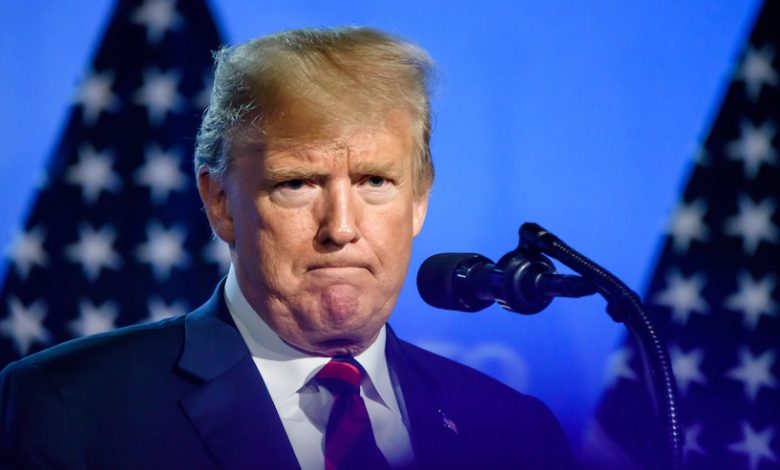
Texas – A fresh political and cultural storm has erupted after Donald Trump once again shared a controversial AI-generated image involving religious symbolism—this time depicting himself standing alongside Jesus. The post, shared on his Truth Social platform, comes just days after he deleted an earlier image that portrayed him in a Christ-like manner, sparking widespread criticism. Yet as backlash grows louder, some of Texas’ most powerful leaders have remained notably silent again, drawing attention to their lack of response in the face of escalating controversy.
The latest image shows Trump standing beside Jesus, with a glowing halo effect surrounding them and an American flag in the background. Unlike the earlier image—where Trump appeared dressed in garments resembling those traditionally associated with Jesus—this time he appears in a suit. Still, the symbolism was unmistakable, and critics quickly reacted. Trump accompanied the post with a defiant caption: “The Radical Left Lunatics might not like this, but I think it is quite nice!!! President DJT.”
Backlash spreads across political and religious lines
The reaction was swift and came from across the political spectrum. Critics argued that the image crossed a line, particularly given its religious undertones. The controversy intensified because it followed closely after Trump publicly attacked Pope Leo XIV, calling him “weak on crime” and “terrible for foreign policy.” Those remarks alone had already stirred international criticism, with Giorgia Meloni calling the comments “unacceptable.”
For many observers, the combination of attacking the Pope and then sharing an image placing himself alongside Jesus raised deeper concerns. Some viewed it as disrespectful toward religious institutions, while others saw it as politically calculated provocation.
Even figures typically aligned with conservative politics voiced discomfort. Brilyn Hollyhand, a former Republican youth adviser, wrote: “This is gross blasphemy. Faith is not a prop. You don’t need to portray yourself as a saviour when your record should speak for itself.” Meanwhile, FOX News personality Riley Gaines added, “Does he actually think this? Either way, two things are true: 1) a little humility would serve him well, 2) God shall not be mocked.”
From the Democratic side, Bernie Sanders sharply criticized the move, writing: “Trump is now attacking the pope for speaking out against war while posting images of himself as a messianic figure. This is not only offensive. It is deranged, egomaniacal behaviour.”
Religious leaders also joined the chorus. Archbishop Paul S. Coakley expressed disappointment, saying: “I am disheartened that the President chose to write such disparaging words about the Holy Father.” Bishop Robert Barron similarly urged Trump to apologize for what he described as “inappropriate” conduct.
Confusion, defiance, and shifting explanations
Adding another layer of confusion, Trump previously claimed that the earlier image—where he appeared dressed in robes resembling Jesus—was actually meant to depict a doctor. That explanation, delivered while he was seen holding McDonald’s bags outside the Oval Office, drew skepticism and even ridicule.
Despite the backlash, Trump has shown little sign of retreating. Instead, he has leaned into the controversy, even sharing comparisons meant to suggest a double standard. He reposted images of Barack Obama depicted with halo-like imagery, with supporters arguing that similar portrayals did not generate the same level of outrage.
The timing of the controversy has also raised eyebrows. It comes amid heightened global tensions, including strained relations involving Iran, and follows reports that Trump mocked Iranian leaders on social media while diplomatic efforts were ongoing. These overlapping issues have only amplified scrutiny of his messaging and tone.
Silence from Texas leaders raises questions
While national and international voices have weighed in, the silence from key Texas political figures has stood out. In a state where Trump continues to hold significant influence, the lack of public reaction has sparked its own debate. Some observers interpret the silence as strategic, while others see it as a reluctance to challenge a powerful political figure despite mounting controversy.
The situation is especially notable given Trump’s strong support among Christian voters, including a majority of Catholics in the 2024 election, according to political analyst Ryan Burge. That support base now appears to be facing a moment of tension, as some religious leaders and conservative voices openly question the appropriateness of the president’s actions.
At the same time, the controversy has highlighted ongoing friction between the White House and the Vatican. Disagreements over immigration, war, and global policy had already strained relations, and this latest episode appears to have deepened that divide.
As the debate continues, the broader impact remains uncertain. Will the backlash fade, or will it leave a lasting mark on Trump’s relationship with religious voters? And perhaps just as importantly, will Texas leaders eventually break their silence, or continue to stay on the sidelines as the controversy unfolds?
For now, the episode stands as another flashpoint in an already tense political climate—one where imagery, symbolism, and silence all carry powerful weight.
President Trump posts yet another image of associating himself with an AI rendering of Jesus Christ.
This comes after multiple troubling posts and many advisors implying he was Christ-like in recent press conferences. pic.twitter.com/Sfzj9lLvub
— National Chronicle (@NCNewsOnX) April 15, 2026