Senate control hangs in the balance as Trump’s weak approval numbers could turn reliable Republican strongholds into battlegrounds

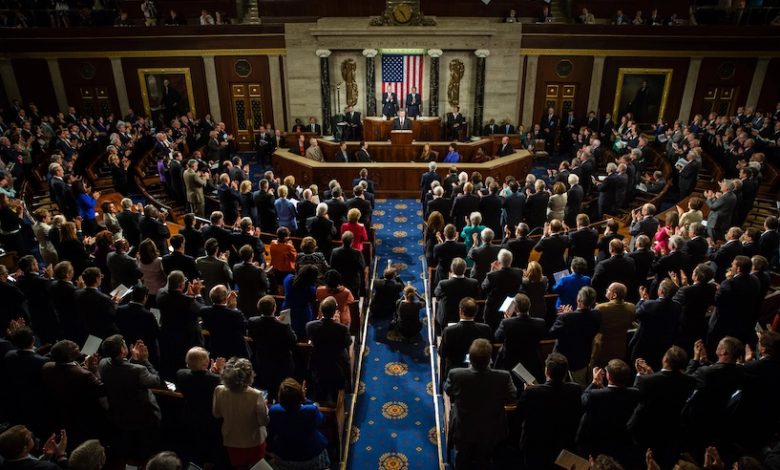
Texas – Senate control hangs in the balance as Republicans confront a growing political threat tied to one defining factor—President Donald Trump’s approval rating, which has remained stuck in the low 40s and is now casting a long shadow over the party’s chances in the 2026 midterm elections.
The situation is not about a single race or one isolated state. Instead, it is a widening concern that the entire Republican Senate majority, already held by a razor-thin margin, could slip away if current trends continue. Political analyst Henry Olsen has warned that even a small drop below the critical 45 percent approval threshold could trigger major consequences across multiple battlegrounds. “If the president stays where he is,” Olsen said, “that puts the Senate at risk.”
At the heart of the issue is a well-known midterm pattern. When a sitting president struggles with low approval, candidates from the same party often feel the impact. That effect becomes even stronger in competitive states or places where demographics are shifting.
A fragile map begins to crack
Olsen made it clear that Trump’s current standing could reshape the political map in ways few expected. Speaking on a recent podcast, he painted a stark picture of what could unfold if the numbers do not improve. “The House is gone unless Trump undergoes a political resurrection,” Olsen said. “So what we’re really looking at is whether Republicans can hold the Senate.”
Texas, long considered a reliable Republican stronghold, is now being watched more closely than ever. Democrats have tried and failed for years to flip the state, but Olsen warned that changing voter trends could finally make it competitive.
A major factor is the growing influence of Hispanic voters, who now make up about one-quarter of the Texas electorate. Trump made gains with Latino voters in 2024, but that support appears to be weakening. “If the Latino vote moves back to where it was in 2018 or 2020,” Olsen said, “Texas suddenly comes into play.”
Senator Ted Cruz narrowly held onto his seat in 2018, and even a small shift in voter behavior could put him at risk again. Olsen emphasized that Republicans do not need to lose Hispanic voters entirely. Even a partial change could tighten margins enough to turn the race into a serious fight.
Alaska and Maine raise new concerns
The warning signs are not limited to Texas. Alaska, another state that typically leans Republican, is showing signs of instability. Its political environment is shaped heavily by individual candidates and broader national mood swings, making it more sensitive than expected.
“If the president stays where he is on approval,” Olsen said, “Alaska is a worry.” Polling data supports that concern. A recent survey found Democrat Mary Peltola leading Republican Senator Dan Sullivan, suggesting that voter sentiment may already be shifting.
Maine presents a different kind of challenge. Senator Susan Collins has built a long career by attracting voters who do not support Trump but still vote for her. However, Olsen warned that this strategy may no longer be enough if Trump’s approval remains low. “If [Trump’s] at 41 percent,” Olsen said bluntly, “Susan Collins is going to lose.” Recent polling numbers show that Collins is already facing strong competition, with Democratic challengers gaining ground. If crossover support weakens, her path to reelection becomes much more uncertain.
North Carolina adds pressure to an already tense map
North Carolina is another state where the balance could shift. Trump previously performed well there, including among Hispanic voters, but any erosion in that support could have serious consequences.
Polling shows Democratic candidate Roy Cooper holding a lead over Republican Michael Whatley, reinforcing concerns that even small changes in voter behavior could tip the outcome.
Olsen pointed out that in close races, even minor shifts matter. Losing just a fraction of support—especially among key groups—could be enough to decide control of the Senate.
An uncertain outcome with major stakes
Despite the warnings, Olsen stressed that the outcome is not set in stone. A rebound in Trump’s approval rating, particularly into the mid-40s, could stabilize the situation and strengthen Republican chances.
However, if the numbers remain where they are, Republicans could find themselves defending seats they once considered safe. States like Texas, Alaska, and Maine could transform into battlegrounds, reshaping the entire election landscape.
The stakes could not be higher. Losing the Senate would not only shift power in Congress but also make it far more difficult for Trump to advance his agenda during the final years of his presidency.
As the 2026 midterms approach, what is unfolding is a slow-building political test—one that will measure not just individual candidates, but the broader strength of the party tied to a president whose approval numbers may ultimately decide the outcome.